View in
Smart Pedicure: A Modern Approach Your Clients Will Feel
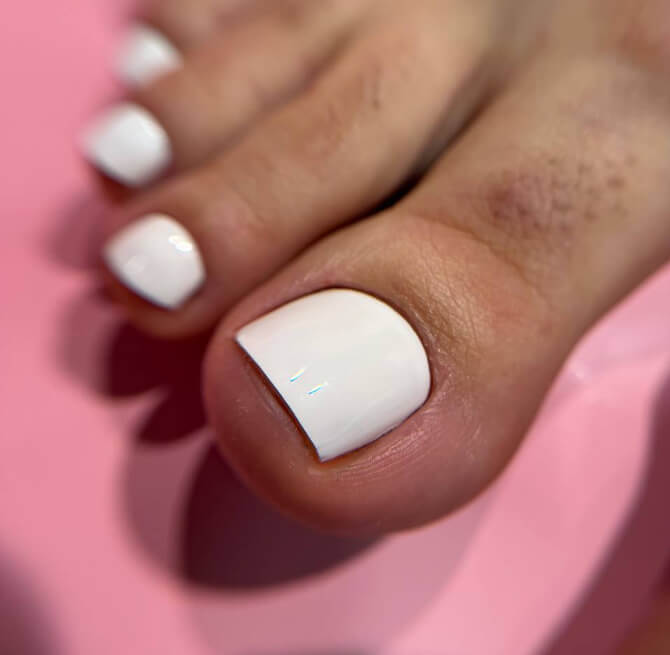
Two clients can sit in the same salon, choose the same polish color, and leave with completely different impressions.
One feels like she had a basic foot soak and some color.
The other feels like her feet were actually cared for.
That difference rarely comes from the polish. It comes from the technique behind the service. A traditional pedicure can be clean and pleasant, but a smart pedicure goes deeper. It looks at the condition of the foot, the nail, the skin, and the client’s comfort before following a set routine.
Your clients can’t always name what makes a pedicure exceptional.
But they feel it.
And when they feel it, they come back.
A smart pedicure is a technique-driven pedicure that prioritizes the condition of the client’s feet and nails over a fixed service script.
That is the main difference.
A traditional pedicure often follows the same familiar order: soak, trim, shape, scrub, polish. There is nothing wrong with that as a basic foundation. But real clients do not all come in with the same feet, the same nail condition, the same skin texture, or the same concerns.
A smart pedicure asks better questions.
The smart pedicure technique is not defined by one product system or one trendy tool. It is defined by the tech’s knowledge and approach. It uses specific tools, adapted prep steps, and a more therapeutic awareness than standard pedicure training usually gives.
That word matters: awareness.
A smart pedicure requires the tech to look, assess, and adjust.
Not every foot needs the same pressure. Not every nail should be handled the same way. Not every client benefits from the exact same routine.
That is what makes the service feel modern.
It is still a beauty service, yes.
But it feels more thoughtful than simply “soak and polish.”
A traditional pedicure can be relaxing.
A smart pedicure is more intentional.
That does not mean the service has to feel clinical or complicated. Clients still want comfort. They still want polish. They still want their feet to look good in sandals. But the work behind the result becomes more precise.
The difference shows up in a few key areas.
Traditional prep is often generic.
The client soaks. The tech softens the skin. The routine moves forward.
Smart pedicure prep is more targeted.
A tech looks at the actual condition of the feet and nails before deciding what to do. Dryness, sensitivity, callus patterns, nail thickness, and product history can all affect the service.
This matters because overworking the skin can create irritation. Underworking it can leave the client feeling like nothing really changed.
Smart prep sits in the middle.
Effective, but controlled.
In a standard pedicure, tools are sometimes used because they are part of the expected motions.
In a smart pedicure, tools are used with purpose.
Professional pedicure tools require technique. Pressure matters. Angle matters. Product choice matters. Knowing when to stop matters even more.
A tool does not make a service advanced by itself.
The hand behind it does.
That is why advanced pedicure training is so important. A tech needs to understand what each tool is doing and how it affects the client’s comfort, skin, and final result.
Toenails have their own logic.
They grow differently than fingernails. They deal with pressure from shoes, walking, workouts, long workdays, and sometimes years of improper trimming or neglect.
A smart pedicure includes a better understanding of toenail conditions and growth patterns.
That does not mean diagnosing medical issues. Nail techs must stay within their professional scope.
But it does mean knowing what looks normal, what needs gentle handling, what should be referred out, and how to work safely with common concerns.
Good toenail work is not only about shaping.
It is about respecting the nail.
Clients feel the difference between a basic pedicure and a thoughtful one.
A traditional pedicure may leave the feet looking better.
A smart pedicure often leaves the feet feeling better too.
The client notices the comfort. The cleaner shape. The smoother finish. The sense that the tech paid attention instead of rushing through a routine.
That is what makes the service memorable.
Not a fancy description.
The feeling afterward.
Pedicures are often undervalued by techs.
That is a mistake.
A strong pedicure service can build serious client loyalty because the result is personal. Clients stand, walk, work, travel, exercise, and live on their feet. When a pedicure makes them feel lighter, cleaner, and more comfortable, they remember.
Smart pedicure clients often rebook because the experience feels noticeably different.
They may not say, “Your technique was more condition-specific.”
They will say things like:
That is the kind of feedback that builds a stronger book.
It also creates referrals.
Pedicure clients talk. Especially when they feel like the service solved a problem or gave them a result they had not experienced elsewhere.
A smart pedicure can turn a service some techs treat as secondary into a real client-retention tool.
That is where the opportunity is.
A lot of nail techs think of pedicures as basic.
Maybe because beauty school teaches them that way.
Maybe because the service can look simple from the outside.
Maybe because manicures, extensions, and nail art get more attention online.
But pedicure work has depth.
A good pedicure requires cleanliness, comfort, technique, timing, tool control, client communication, and judgment. It asks you to understand what the client needs without overstepping your scope.
That is not “lesser” work.
It is professional work.
The problem is that many techs were never taught pedicures as a true advanced service. They learned the basic routine, then repeated it.
That is where the smart pedicure approach changes things.
It reframes the pedicure as a skill-based service, not a filler appointment.
And once a tech sees it that way, the service starts to feel very different.
Smart pedicure technique is usually not taught in standard licensing programs.
Most basic programs focus on sanitation, standard procedure, and simple service flow. That foundation matters. But it does not usually go deep enough into advanced tools, foot and nail assessment, technique adaptation, or client-specific decision-making.
To learn smart pedicure properly, techs need specialized instruction.
That means learning:
Hands-on practice matters here.
You cannot fully learn this from watching someone perform a pedicure online. You need feedback. You need correction. You need someone experienced to watch how you hold the tool, how you approach the skin, and how you make decisions during the service.
Why Not Nails Academy teaches smart pedicure as part of its advanced training curriculum for techs who want to move beyond basic service steps.
The goal is not to make the pedicure sound more complicated.
The goal is to make the service better.
When a tech learns smart pedicure technique, the service usually becomes more confident.
You stop rushing through a memorized routine.
You start noticing more.
The nail shape. The skin condition. The pressure points. The client’s comfort. The areas that need care and the areas that should be left alone.
That awareness changes the whole appointment.
You begin to understand why one client needs a gentler service, why another needs more targeted work, and why a third may need a referral before beauty work continues.
That kind of judgment builds trust.
Clients can feel when a tech knows what she is doing. They relax differently. They ask more questions. They come back because the service feels professional, not automatic.
For techs, that confidence matters too.
A pedicure becomes less of a routine task and more of a service where skill shows clearly.
A pedicure is not a lesser service.
It is an opportunity.
An opportunity to show care, precision, comfort, and advanced technique in a way clients can feel immediately.
The smart pedicure technique turns a standard appointment into something more thoughtful. It helps techs look at the client’s feet and nails with better judgment, better tools, and a stronger understanding of what the service should accomplish.
Clients may not know the terminology.
They may not ask for a “smart pedicure” by name.
But they know when a pedicure feels different.
And that feeling is what brings them back.
If you want to upgrade the way you approach pedicure work, learn smart pedicure technique through Why Not Nails Academy’s advanced training programs and start treating pedicures as the advanced service they can be.