RESERVE YOUR SPOT

Become a Nail Technician in New York: The Complete Career Guide (2026)

Thinking about becoming a nail technician in New York? Good. It’s one of the few careers left where you can go from complete beginner to earning real money in under a year — without a degree, without debt, and without pretending to love a desk job.

But “fast entry” doesn’t mean “easy,” and most guides online won’t tell you the difference. This one will.

This guide is for three kinds of people: someone considering nails as a first career, someone switching careers and wondering if it’s realistic, and someone who already loves doing nails and wants to know what it takes to get paid for it legally in New York.

By the end, you’ll understand whether this profession fits you, exactly how New York licensing works, what training actually costs, what you can realistically earn, and where this career can take you five years from now. No hype, no filler.

Become a Nail Technician in New York: The Complete Career Guide (2026)

A quick disclaimer before we start: licensing rules are set by the New York State Department of State and can change. Everything in this guide reflects current requirements, but always verify details on the official NYS Department of State website before applying. This guide is education, not legal advice.

What’s in this guide:

Prefer to just ask a person? Book a free consultation. A 10-minute conversation with an instructor can answer most of the questions below, with no cost and no obligation.

Guide Navigation

Is Becoming a Nail Technician Right for You?
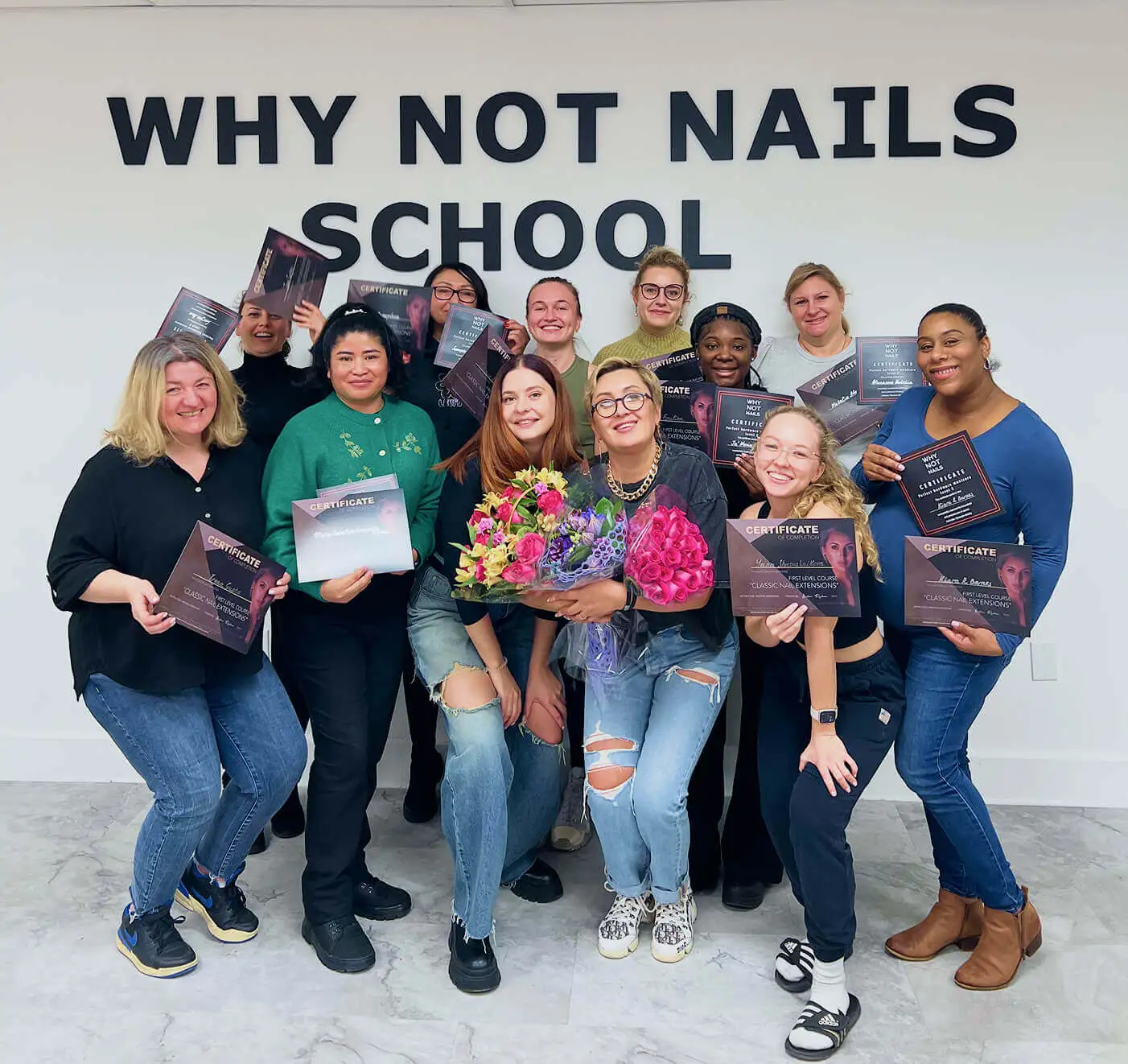
Nail Technician Training Program

Before we talk about hours, exams, and applications, let’s answer the question that actually matters. Because the licensing process is straightforward. Deciding whether this career fits your life is not.

Why people choose this career

The demand is real. New York has one of the largest beauty markets in the country, and clients don’t stop getting their nails done in a recession — they might skip a vacation, but they keep their three-week appointment.

The entry is fast. New York requires 250 hours of approved training for a Nail Specialty license — one of the shortest licensing paths of any regulated profession in the state. Compare that to 1,000 hours for full cosmetology. If you want to work with nails specifically, you don’t need to spend a year learning haircuts you’ll never do.

You can work for yourself. Very few careers let you go from employee to booth renter to studio owner in a few years with relatively low startup costs. Nails is one of them.

The schedule bends around your life. Techs work mornings, evenings, weekends only, part-time around kids, full-time toward a business. The chair doesn’t care.

And it’s genuinely creative work. You’re building shape, structure, color, and finish on a tiny canvas, ten times per client. If you like working with your hands and seeing an immediate result, few jobs deliver that feeling as reliably.

Challenges to consider

Now the honest part.

This is physical work. Your hands, wrists, back, and eyes work hard all day. Good posture, good lighting, and proper technique protect you — but nobody should tell you this job isn’t demanding on the body.

Clients are people. Most are wonderful. Some arrive late, change their mind mid-service, or show you a photo of nails that took someone else four hours and expect them in ninety minutes. Client communication is a skill you’ll build just like cuticle work.

The learning never stops. Products change, techniques evolve, and the standard on Instagram rises every year. Techs who stop learning around year two quietly plateau — in skill and in income.

And building a client base takes time. Your first months of work are slower and less profitable than your third year. Anyone who tells you otherwise is selling something.

Who usually succeeds?

We’ve watched hundreds of students go through training, and the pattern is consistent. The people who thrive are patient with repetition — they’ll do the same cuticle motion two hundred times to get it right. They’re detail-obsessed in a healthy way. They actually like people, not just nails. And they treat the first year as an investment, not a payday.

Notice what’s not on that list: natural artistic talent. It helps, but we’ve seen “naturally talented” students get outworked by disciplined ones every single time.

Who may not enjoy this profession?

No judgment — just honesty, because it’s cheaper to find out now.

If you need every day to look different, the repetition may wear on you. If constant close-up detail work sounds tedious rather than satisfying, that feeling doesn’t usually go away. If you struggle with feedback, the early months will be hard, because correction is how technique is built. And if you’re looking for fast passive income — this is a craft. Craft pays well, but it pays the people who show up.

Pro tip: Don’t decide from articles alone — including this one. Spend one day around the actual work before committing. A one-day course or even a few hours watching a busy salon will tell you more about whether this career fits you than a month of research. The people who confirm their choice in person almost never drop out later.

If this sounds like the right career for you, the next step is understanding exactly how the path works — from your first practice hand to your first paying client.

Still on the fence? Talk to an instructor. Tell us about your goals, ask your questions, and get honest guidance with no pressure to enroll.

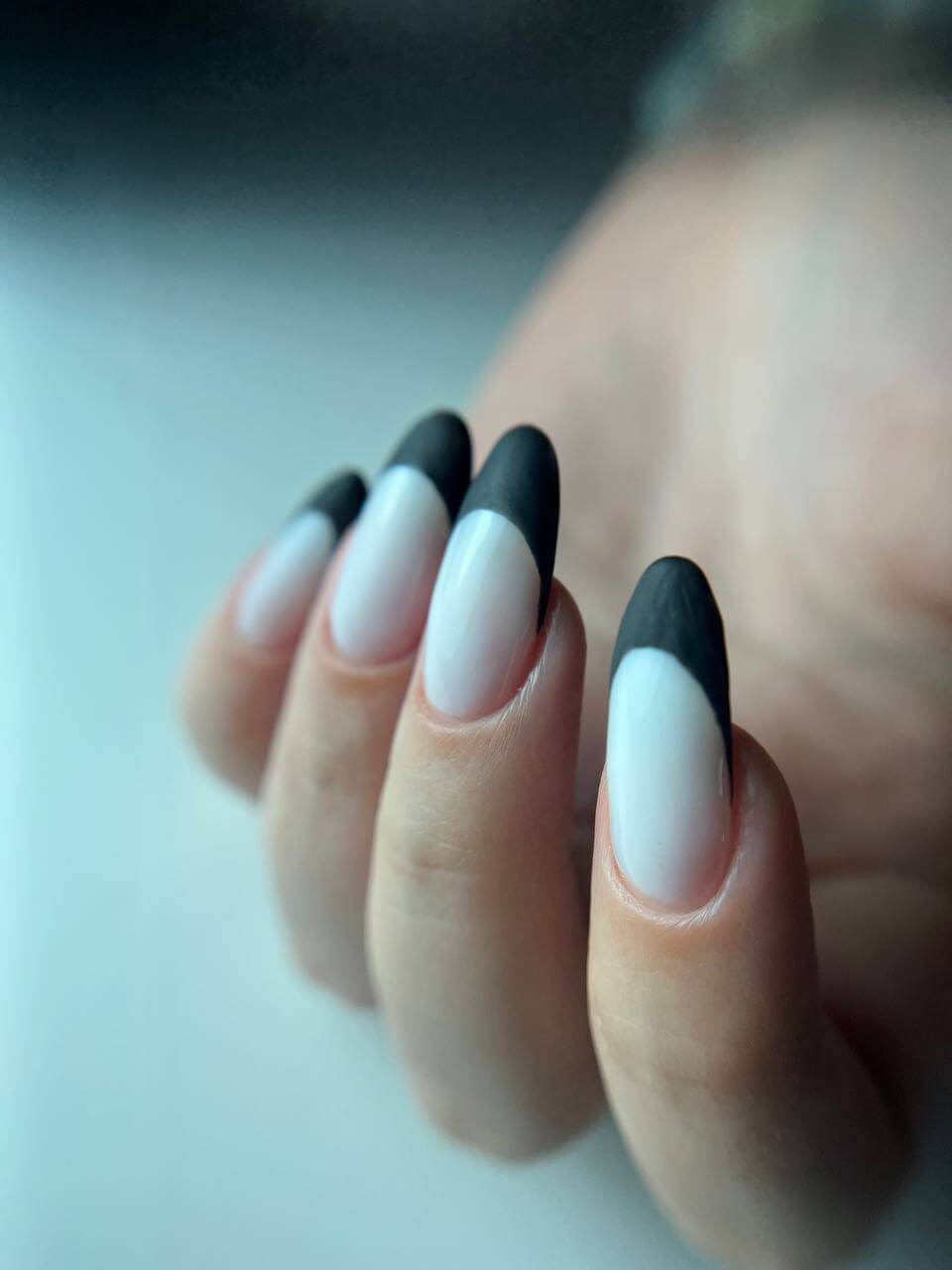
How to Become a Nail Technician in New York

How to Become a Nail Technician in New York

Most articles give you a checklist here. We’re going to give you the actual journey instead, because the checklist hides the part that matters: what each step feels like and why it exists.

The journey from beginner to licensed professional

The path looks like this:

Learn the fundamentalsComplete state-approved educationApply for your licensePass the written and practical examsLand your first jobGrow your career

Six stages. On paper, a few months. In reality, a transformation — from someone who likes nails to someone clients trust with theirs.

What each step actually means

Learning the fundamentals means building hand skills before anything else: how to hold tools, how to prep a nail, how to work safely and consistently. Some people start with a short professional course to test whether they enjoy the work before committing to a full licensing program. That’s a smart move, not a detour.

State education is the 250-hour approved program required by New York. This is where you cover sanitation, nail anatomy, safety, service procedures, and state law. It exists to protect the public — and once you understand what an untreated infection or a badly used e-file can do, you’ll understand why the state insists on it.

The license application goes to the New York State Department of State, Division of Licensing Services. You’ll submit proof of your completed education, a health certification, and a modest application fee. New York even offers a temporary license option so you can start working while you wait to complete your exams.

The exams come in two parts. The written exam tests your knowledge — sanitation, infection control, safety, state regulations. The practical exam tests your hands — can you perform a safe, correct service under observation? Neither exam is designed to trick you. Both are designed to confirm you won’t hurt anyone.

Your first job is where school knowledge meets salon reality. Expect a gap between the two — every new tech feels it, and we’ll talk about how to close it later in this guide.

Career growth is the stage nobody plans for and everyone should. Within a few years you can specialize, raise your prices, rent a booth, open a studio, or teach. The license is the door. What’s behind it is up to you.

Reality check: Notice that “pass the exams” and “be ready for your first client” are two different steps on this roadmap — not one. The techs who transition smoothest are the ones who build hands-on skill alongside licensing hours, not after them. Passing the exam with hands that have only touched practice sheets is technically possible. It’s also the recipe for a very stressful first month.

Want to know what your path could look like? Book a free consultation. We’ll help you map out a realistic starting point based on your schedule, experience, and goals.

Now let’s get precise about the licensing requirements themselves — because this is the part where details matter.

New York State Licensing Requirements

New York State Licensing Requirements

Here’s everything New York actually requires, explained in plain language.

Quick summary: Age 17+. 250 hours at a state-approved school (or one year as a registered trainee). Health certification. Application to the NYS Department of State, then a written and a practical exam. License valid four years. No degree required, no citizenship requirement, no continuing education.

Who issues the license?

The New York State Department of State (DOS), Division of Licensing Services. The license you need is called a Nail Specialty license, and it’s legally required for anyone who cuts, shapes, or enhances the appearance of nails for payment — including manicures, pedicures, artificial nails, and nail art. Working on clients for money without it is illegal, and enforcement in New York is real.

One thing many people don’t realize: you do not need to be a U.S. citizen to get this license.

Minimum age

You must be at least 17 years old to apply. That’s it — no degree, no diploma requirement beyond your approved nail education.

The 250-hour requirement

New York requires completion of a 250-hour approved course of study at a state-approved school. Those hours cover sanitation and infection control, nail anatomy and structure, manicure and pedicure procedures, artificial nail application, and New York State laws governing the profession.

Why 250 hours? Because that’s what the state considers the minimum to work safely on the public. Keep the word “minimum” in mind — it becomes important in the next section.

There’s also an alternative route: the nail trainee pathway, where you register as a trainee, work for a year under a licensed nail specialist, complete a short approved course, and then take the exams. It’s slower, but it lets you earn while you learn under supervision.

Application process

Applications go through the state’s online licensing system. You’ll need your school to affirm your completed hours, a health certification signed by a physician, physician’s assistant, or nurse practitioner, and a completed one-hour Domestic Violence and Sexual Assault Awareness course (a state requirement for education-based applicants). The application fee is modest, and you can request a six-month temporary license that lets you work while completing your exams.

The written exam

The written exam tests theory: sanitation procedures, infection control, safety practices, and New York State regulations. It’s not a trivia contest — it focuses on the knowledge that keeps clients safe. New York administers its own exams, and they’re offered in multiple languages, including English, Spanish, and Russian.

The practical exam

The practical exam evaluates your hands-on work: can you perform standard nail services correctly, safely, and hygienically under observation? Examiners are watching your process — your sanitation, your tool handling, your service order — more than your artistry. Nobody fails the practical for a slightly imperfect polish line. People fail it for skipping sanitation steps.

What happens after passing?

You receive your Nail Specialty license, which in New York is valid for four years — longer than most states. You must display it at your workstation. And notably, New York doesn’t require continuing education for renewal — which means staying current is entirely self-directed. Most serious techs plan it themselves through professional manicure courses rather than waiting for the state to ask.

Pro tip: Use the temporary license. Many new techs don’t realize they can request it with their application for a small extra fee and legally start working while completing exams. Those early weeks behind a real chair do more for your practical exam than any amount of studying — you’ll walk in having already done the service dozens of times on real people.

Which brings us to something important: the state considers your education finished at 250 hours. The industry does not. Here’s the difference.

Licensing questions are the #1 topic students ask about. Bring your questions to a free consultation—we’re happy to help.

Professional Training vs State Licensing Education

Gel Nail Course For Beginners

This is the section almost every career guide skips, and it’s the one that saves new techs the most confusion. So let’s kill the myth directly.

The myth: a license means you’re ready to work.

The reality: passing a licensing exam proves you can work safely. It does not prepare you for a fully booked salon schedule — for the client who expects a level of finish the exam never tested, delivered at a pace the classroom never demanded.

Those are two different kinds of readiness. They’re built by two different kinds of education — and New York has both.

State Licensing Program (250 hours)Professional Training (courses & academies)
PurposeMake you legalMake you good
Required by lawYesNo
FocusSanitation, safety, theory, basic servicesTechnique, precision, speed, modern methods
Standard it setsThe floor — safe minimum practiceThe ceiling — salon-level, client-ready work
Covers modern techniques (e-file work, Russian manicure, structured gel, nail architecture)Rarely, and rarely in depthYes — this is the entire point
ResultA licenseA skill set clients pay premium prices for

The state licensing program exists for public safety. It’s regulated, standardized, and necessary — and it is not designed to make you competitive in a modern salon. That’s not a criticism. It’s simply not the job the state gave it.

Professional training is where technique lives: e-file control, deep cuticle work, structured gel application, nail architecture, the finishes clients screenshot and bring to appointments. Licensing school teaches you to pass an exam. Professional training teaches you to keep a client.

This is why most serious nail technicians in New York go through both — in either order. Some take professional courses first to build hands and confidence, then complete licensing hours. Others get licensed first and then quickly discover that the client in front of them expects work the exam never tested.

One of the most common things we hear from newly licensed techs is some version of: “I passed everything, and I still didn’t feel ready for my first real client.” That feeling is normal — because a license certifies knowledge, and readiness is built somewhere else entirely: on real hands, in real time, with someone correcting you. No exam can hand you that, and no exam is trying to. (We’ve written more about why licensing school doesn’t cover techniques like e-file work in this breakdown — the short version is: it’s not the school’s job.)

Instructor insight: When comparing training options, pay attention to where the education physically happens. There’s a real difference between a classroom that exists only for classes and a program running inside a working salon — where actual clients are being served a few feet away and you absorb real service pace, real requests, and real finishing standards just by being in the room. One environment teaches you the exam. The other quietly teaches you the job.

Which raises the question everyone asks next: if the gap between school and salon is real, can a total beginner actually make it?

Not sure where to start — or whether you need both types of training? Ask during a free consultation.

Can You Start With No Experience?

Enroll today

Short answer: yes. Longer answer: yes, and beginners often have an advantage they don’t expect.

Do beginners really succeed?

Constantly. After working with hundreds of students, our instructors will tell you something counterintuitive: complete beginners are often easier to train than self-taught techs, because there’s nothing to un-learn. No bad e-file habits, no “but I’ve always done it this way,” no shortcuts baked into muscle memory.

What beginners lack in experience, they make up for in clean fundamentals — if they’re taught properly from day one.

What you’ll learn first

Not nail art. Sorry.

Your first weeks are about four things: prep (how to prepare the natural nail so the product actually adheres), sanitation (non-negotiable, ever), tool control (how to hold, angle, and move your instruments with precision), and product application (thin, even, controlled layers).

Boring? Slightly. Foundational? Completely. Every advanced technique you’ll ever learn — Russian manicure, structured gel, extensions — is built on these four skills. A tech with flawless prep and average art will always out-earn a tech with beautiful art and sloppy prep, because her work lasts and her clients come back.

Pro tip: Time your practice sets from day one. Not to rush — to watch the number fall. Timing turns invisible progress into something you can see, and knowing your honest pace is what lets you book real clients later without panic.

How confidence develops

Nobody feels confident on day one. Or day ten.

Confidence in this profession is built the same way for everyone: repetition plus correction. You do the movement, an instructor adjusts your hand, you do it again. Somewhere around the fiftieth or hundredth repetition, your hands stop asking your brain for permission — and that’s the moment techs describe as “it finally clicked.” You can’t rush it. You can only earn it faster with good feedback.

What surprises most beginners

Students often arrive expecting the technique to be the hard part. It almost never is. The real challenge is the pace of their own progress: week one feels impossible, week three feels slow. Then somewhere in week five or six, they look at their work and can’t believe the same hands produced what they made on day one.

The other big surprise: how much of this job is pressure control. Not creativity, not color theory — the physical sensitivity in your hands. Beginners press too hard on everything. Learning to work lightly is half the education.

Instructor insight: Practice at home between classes — but bring that work back to your instructor every time. Home repetition builds speed; instructor correction makes sure you’re building the right movement. Repetition without correction is how self-taught habits form, and un-learning them later takes longer than learning correctly the first time. If you’re deciding where to begin, we’ve broken down the typical starting points in this beginner’s guide.

Knowing what surprises beginners is useful. Knowing what trips them up is even more useful — so let’s talk about the mistakes we see over and over.

Starting from absolute zero? So did most of our students. Tell us where you are — we’ll tell you where to begin.

Common Beginner Mistakes

Common Beginner Mistakes

Every instructor has watched these same mistakes on repeat. Learn them now and you’ll save yourself months.

Buying expensive tools too early

The number one mistake, and it happens before training even starts. A beginner watches a few videos, buys a professional e-file, a lamp, and forty gel colors — then discovers she doesn’t know what half of it is for, and the expensive e-file doesn’t make her hands any steadier.

Tools don’t create skill. Skill makes tools useful. Start with what your program recommends and upgrade when your technique tells you what you actually need.

Focusing on nail art before prep

Art is what beginners fall in love with. Prep is what clients pay for.

A gorgeous design on a badly prepped nail lifts in a week — and the client doesn’t blame the design. Students often arrive convinced that art is the skill that gets them noticed. Then they discover what every working tech knows: wear time is what gets them rebooked. Nail art built on weak prep is a beautiful house on sand.

Ignoring sanitation

Not “refusing” — just treating it as the boring part to rush through. Then it becomes habit, and habits are what examiners and salon owners see first. Sanitation is also the fastest way to lose a client’s trust: people forgive an imperfect shape; they never forgive an infection.

Practicing without feedback

Practicing alone feels productive. Often it isn’t — because when you practice a mistake a hundred times, you haven’t practiced. You’ve trained the mistake.

This is the strongest argument for structured education over YouTube: not the information, which is everywhere, but the correction, which is not. A good instructor fixes your hand position in ten seconds. Alone, you might not notice the problem for a year.

Expecting confidence immediately

One thing our instructors see in every single group: around week two, someone quietly panics — “everyone else is getting this faster than me.” Almost never true — and even when someone is faster, it predicts nothing. The learning curve in nails is not a line. It’s a staircase: flat, flat, flat, then a sudden jump. Most people quit on the flat part, two weeks before their jump.

Comparing yourself to experienced artists online

The work you see on Instagram was done by someone with five years and five thousand sets behind her, filmed under perfect lighting, and posted because it was her best set of the month. Comparing your week-three practice hand to that isn’t motivation. It’s sabotage.

Compare yourself to your own work from last month. That’s the only comparison that means anything.

Pro tip: Photograph every practice set — same angle, same lighting. Not for Instagram; for yourself. When week five feels like you’re going nowhere, your own photo archive is the only objective witness that says otherwise. Every instructor has watched this simple habit talk a discouraged student out of quitting.

Mistakes cost time — which is exactly what everyone wants to know next: how long does this actually take?

The cheapest way to avoid the mistakes on this list? Ask before you invest in training. A free consultation could save you time, money, and frustration. 

How Long Does It Take to Become a Nail Technician?

How Long Does It Take to Become a Nail Technician?

The license is only one part of the timeline. Here’s the whole picture.

Quick summary: Education: 2–3 months full-time, 4–6 part-time. Application and exams: a few more weeks (a temporary license lets you work meanwhile). Regular clients and real confidence: 6–12 months. Total: under a year from zero to a working career.

Typical timeline

Weeks 1–2: First skills. Tool handling, prep basics, your first full (slow, imperfect, completely normal) practice services.

Months 1–3: Core education. Most full-time students complete New York’s 250 hours in roughly two to three months. Part-time or evening schedules stretch this to four to six months — and that’s fine. Consistency beats intensity.

Exam period: After your application is accepted, you schedule the written and practical exams. With the temporary license option, many techs start working during this stage.

First job — months 3–6: Your services are slower than experienced techs’ and your book isn’t full. This is the stage where new techs earn the least and learn the most.

Common mistake: taking a “break to practice more at home” between finishing education and starting work. The gap between school and salon never closes from your kitchen table — your first ten clients will teach you more than fifty practice tips. Momentum is part of the curriculum.

First regular clients — months 6–12: The turning point. Clients start rebooking before they leave, referring friends, asking for you specifically. This is when the career starts feeling like a career.

What affects your timeline?

Four things, in order of impact: your schedule (full-time vs part-time study), your practice hours outside class (the students who practice at home progress roughly twice as fast — we see it every cohort), the quality of feedback you receive, and how quickly you start working with real clients after licensing. Waiting until you “feel ready” is the most common self-inflicted delay. You get ready by doing.

Instructor insight: The single biggest timeline accelerator is real models, early. A practice hand teaches motion; a real hand teaches everything else — warm skin, real cuticles, a person who flinches. And vary your hands: students who practice on different nail types — long, bitten, curved, damaged — progress noticeably faster than those who train on one convenient friend. Students who train on real models from the start typically shave months off the awkward “first clients” stage, because for them, a real hand is already normal by graduation day.

Time is one investment. Money is the other — so let’s talk about it honestly.

Wondering how long it could take you? Book a free consultation. We’ll help you create a realistic timeline based on your schedule, experience, and goals. 

How Much Does It Cost to Become a Nail Technician?

How Much Does It Cost to Become a Nail Technician?

Costs vary by school, program, and city, so instead of quoting numbers that will be outdated in a year, here’s how to think about each category — and where beginners overspend.

Education

Your biggest investment, and the one worth being pickiest about. The 250-hour licensing program is the required baseline; professional technique courses are the layer that determines your earning power. When comparing programs, price-per-hour matters less than students-per-instructor. A cheap program where you watch demonstrations from the back row is more expensive than it looks, because you’ll pay again to learn it properly.

License fees

The smallest line item by far. New York’s application fee and exam fees together are modest — genuinely one of the most affordable professional licenses in the state. Check the Department of State website for current amounts.

Starter kit

The place we watch students burn money, every single month. You need a reliable core: quality instruments, a lamp, a starter set of products your school works with. You don’t need forty colors, three e-files, or anything a TikTok ad sold you at 2 a.m. Ask your instructors what to buy — a real answer from someone who uses tools daily is worth more than a hundred reviews.

Continuing education

Budget for it mentally from the start. Not because anyone requires it — New York doesn’t — but because the highest-earning techs treat one or two advanced courses a year as a business expense, the same way a salon budgets for products. Every specialization you add raises your prices.

Typical first-year investment

Think of your first year’s total as: required education + smart starter kit + one advanced course, minus the income you begin earning within months of licensing. Framed that way, this is one of the rare careers where the entire cost of entry can come back to you within the first year of real work.

Pro tip: Before buying anything, ask your school for its exact kit list — and ask what’s already included in tuition. The most expensive purchase in this profession is the one you make twice: once from an ad, and again when you find out what you actually needed.

Whether it does depends on the other side of the equation — what you actually earn. Let’s look at that properly.

Wondering what it will actually cost? Book a free consultation. We’ll break down the costs based on your goals—from training and licensing to your first professional kit.

How Much Do Nail Technicians Earn in New York?

How Much Do Nail Technicians Earn in New York?

Most articles lead with a single salary number here. That number is nearly useless, because “nail technician income” in New York spans an enormous range — and where you land on it is mostly within your control.

Quick summary: First year — modest and growing. Established employee — stable. Specialized tech or studio owner — top of the market. The lever that moves you up isn’t luck or location. It’s technique and retention.

What affects income?

Location. A tech in Manhattan or brownstone Brooklyn charges differently than a tech upstate. New York City is one of the strongest nail markets in the country.

Specialization. This is the big one. Standard services compete on price. Specialized services — Russian manicure, structured gel, extensions — compete on skill, and skill commands premium pricing.

Retention. The quiet variable nobody puts on infographics. A tech whose clients rebook every three to four weeks has a predictable, growing income. A tech who constantly hunts new clients has a treadmill.

Experience. Not years on paper — speed plus quality. An experienced tech delivers better work in less time, which means more clients per day at higher prices.

Typical income ranges

StageWhat income looks like
First yearModest and growing. Building speed, skill, and a client base. Tips (often 20–30% in NYC) meaningfully supplement early income.
Established employee (2–3 yrs)Solid, stable income with a regular book of clients.
Specialized tech (premium services)Significantly above standard-service techs. In NYC, premium services like Russian manicure can price at multiples of a basic manicure.
Booth renter / private studioHighest ceiling. You keep what you earn after costs — income scales with your book and your prices.

Treat any specific figure you see online as a snapshot, not a promise. The ranking above, though, holds year after year.

How experienced technicians increase earnings

Russian manicure. Currently one of the highest-value specializations in the New York market. Precise, in demand, and hard to do well — which is exactly why it prices high. We’ve broken down the actual math of this specialization here, and it’s usually learned through a dedicated Russian manicure course rather than general education.

Extensions. Structured gel and extension work are longer, higher-ticket services with loyal repeat clients.

Premium services. Combined services, structured pedicures, advanced finishes — each one raises the average ticket without requiring more clients.

Retail. Quietly underrated. A tech who can recommend the right home-care products adds income per visit and — more importantly — sends clients home with better nails, which protects her own work.

Common mistake: staying at “beginner prices” long after your work stops being beginner work. Underpricing out of fear doesn’t fill your book — it fills it with clients who’ll leave over five dollars. Raise prices when your rebooking rate says you’ve earned it, not when you finally feel brave.

And speaking of rebooking — one habit separates techs who grow from techs who guess.

Pro tip: Track one number from your very first month of work: what percentage of clients rebook before leaving. Not followers, not tips — rebooking rate. It’s the earliest and most honest indicator of your technique, and every income jump in your career will follow it, not precede it.

Income is one dimension of this career. Direction is the other — because “nail technician” isn’t one job. It’s a starting point.

Not sure which specialization is right for you? Book a free consultation. We’ll help you compare your options. 

Career Paths for Nail Technicians

Career Paths for Nail Technicians

Here’s what people miss when they picture this career: the chair you start in is not the chair you finish in. The paths below aren’t a menu — they’re usually a sequence.

Salon employee

Where most careers begin, and for good reason. A salon gives you clients you didn’t have to find, colleagues to learn from, and real-world speed you can’t build in school. The trade-off is a commission or wage structure. Stay long enough to get fast, consistent, and fully booked — then you’ll have options.

Pro tip: Bring photos of your work to salon interviews — five clean sets on real hands say more than anything on a resume. Salon owners hire hands, not paperwork.

Booth rental

The first step into working for yourself. You rent a station, set your prices, keep your earnings, and bring your own clients — which is why this step comes after you’ve built a book, not before. Booth rental with no client base is just paying rent to be nervous.

Private studio

Your own space, your own brand, your own rules. Higher costs, total control. Many of New York’s best techs work exactly this way: small studio, loyal client list, premium pricing, waitlist.

Mobile services

Bringing services to clients — offices, homes, events. Lower overhead, more logistics. It suits techs who value flexibility and can manage their own scheduling discipline.

Educator

At some point, experienced techs discover their second skill: explaining. Teaching workshops and courses pays well, but the deeper appeal is leverage — one instructor’s technique multiplied across every student’s future clients.

Salon trainer

The in-between path: staying in the salon world while training its teams. Salons increasingly pay for exactly this, because one strong trainer raises the standard of an entire staff.

Business owner

The long game. Owning a salon or academy is less about doing nails and more about building the place where nails get done — hiring, standards, brand, operations. Nearly every owner we know started exactly where you are: at hour zero of 250.

Reality check: Don’t try to pick your final path in year one. Your client book, your speed, and your appetite for risk will make the choice obvious around year two or three. Techs who force the booth-rental leap before their book is ready usually end up back at a salon — minus a few months of rent.

None of these paths are available to someone with weak fundamentals. All of them are available to someone with strong ones. Which is why the next decision — where you train — is the most important one in this entire guide.

Not sure which path is right for you? Book a free consultation. We’ll help you identify the most realistic next steps based on your goals and starting point.

How to Choose a Nail Training Program

How to Choose a Nail Training Program

Not all programs are equal. Some build careers; some just collect tuition. Here’s how to tell them apart before you pay.

Questions every student should ask

How many students per instructor? Will I practice on real models or only on plastic hands? Do the instructors currently work with clients, or did they stop years ago? What exactly is in the kit, and what will I need to buy separately? Can I see recent student work — not the school’s marketing photos, the students’ actual results? What happens if I need extra practice on a technique I’m struggling with?

A quality program answers all of these without flinching. Hesitation is an answer too.

Signs of a quality program

Small groups — because technique is corrected hand-by-hand, and nobody’s hand gets corrected in a room of twenty-five. Instructors who still take clients, because the industry moves fast and teaching from five-year-old habits shows. Real models, because plastic hands don’t have cuticles, don’t flinch, and don’t rebook. Structured curriculum with clear stages instead of “watch and repeat.” And honest expectations — a school that tells you the first weeks will be hard is a school telling you the truth.

Red flags

Guaranteed income promises. Enormous class sizes marketed as “community.” Certificates handed out for attendance rather than demonstrated skill. Pressure to enroll today because “prices go up tomorrow” (they always say tomorrow). Instructors whose own portfolio you can’t find. And any program that talks more about your future income than your future technique.

Questions to ask before enrolling

Beyond the list above, ask yourself two things. First: does this program teach the techniques the market actually pays for right now — e-file work, structured application, modern prep — or a curriculum frozen in another decade? Second: when I imagine being corrected by these instructors two hundred times, do I trust them?

Instructor insight: Visit before you enroll — physically. Ten minutes inside tells you what no website can: how many students share one instructor, whether real services are happening around the training, whether the place runs like a salon or like a lecture hall. A school attached to a busy working salon can’t hide its standards — they’re on every client’s hands walking out the door. (For specialized programs like Russian manicure, we’ve written a separate guide on what to check before paying.)

That second question matters more than any brochure, because correction is the product you’re buying. Which brings us to something we believe strongly enough to build a school around.

Interview us. Put us to the test. Ask every question on this list during a free consultation. A good training program should be happy to answer every one of them. 

Why Technique Matters More Than Speed

Why Technique Matters More Than Speed

Here’s an opinion you won’t find in most career guides, and it’s the closest thing this industry has to a secret.

New techs obsess over speed. How fast can I finish a set? How many clients can I fit in a day? It feels like the obvious math: more clients, more money.

The math is backwards.

The highest-earning techs we know are not the fastest ones. They’re the most precise ones. Precision is what makes a manicure last four weeks instead of two. Precision is what makes the cuticle line look clean in a close-up photo. Precision is why a client crosses Brooklyn — past thirty cheaper salons — for one specific tech.

And here’s the mechanism most people miss: precise work creates returning clients, and returning clients are the entire business. A new client is a coin flip. A returning client is income you can predict, schedule, and build a life on. Retention isn’t a marketing metric — it’s the direct output of technique.

This is also why prep matters more than design. Design is what the client sees on day one. Prep is what she sees on day nineteen, when the gel still hasn’t lifted. Day one gets you a compliment. Day nineteen gets you a rebooking.

Speed built on sloppy technique just means producing mediocre work more efficiently. Speed built on precise technique is where the real money in this profession lives.

Learn slowly. Earn quickly after. That order doesn’t reverse.

Reality check: Your speed will roughly double in your first working year whether you think about it or not — repetition does that automatically. Your precision won’t move an inch unless you make it the explicit goal. Want proof the market pays for it? Compare how precision-first salons price their services against the discount salon down the block. That price gap is technique, converted to dollars.

Curious what precision-first training looks like? Book a free consultation. We’ll show you how we teach, what you’ll practice, and what to expect from your first day.

One more thing shapes how well you learn — and it’s something most guides never mention at all.

Training in English, Spanish & Russian

Training in English, Spanish & Russian

Why language matters

Technique is transmitted through explanation. Angle, pressure, layer thickness, timing — these are subtle instructions, and subtlety is the first thing lost in a language you’re still translating in your head.

New York understands this: the state licensing exams themselves are offered in multiple languages, including English, Spanish, and Russian. Your education should meet the same standard. A student learning in her strongest language asks more questions, absorbs corrections faster, and walks out with deeper skill. That’s not a comfort feature. It’s an educational one.

Training in English

The default for most of the market, and the language of most product documentation, industry content, and salon environments in New York. If English is your strongest language, train in it — and know that your client communication skills develop right alongside your technique.

Training in Spanish

New York’s Spanish-speaking beauty community is enormous, both as a client base and as a professional one. Training in Spanish means mastering technique without a translation layer — and serving Spanish-speaking clients with total confidence from day one.

Training in Russian

There’s a particular irony in learning Russian manicure through a second language. The technique’s terminology, its precision culture, and much of its best instruction are rooted in Russian-speaking professional tradition. For Russian-speaking students in New York, training in Russian isn’t just easier — it’s often closer to the source.

Instructor insight: Whatever language you train in, learn your product and safety vocabulary in English too. Product labels, safety data sheets, and most manufacturer education are English-first — and reading them yourself, instead of relying on translated summaries, is a quiet professional advantage that pays off for years.

Want to study in English, Spanish, or Russian? Book a free consultation. We’ll help you choose the right language, instructor, and schedule for your goals.

Everything in this guide so far applies no matter where you train. But since you’ve read this far, it’s fair to tell you where we fit into this picture — briefly, and honestly.

Why Students Choose Why Not Nails

Why Students Choose Why Not Nails

Why Not Nails is a working salon and training academy in Brooklyn — one space, both things at once. We put this section at the end on purpose: a career guide should earn your trust before it mentions a brand. But here’s what our students say made the difference.

Small classes

Technique is corrected one hand at a time. Our groups stay small enough that every student’s hands get instructor attention — not occasionally, constantly.

Real models

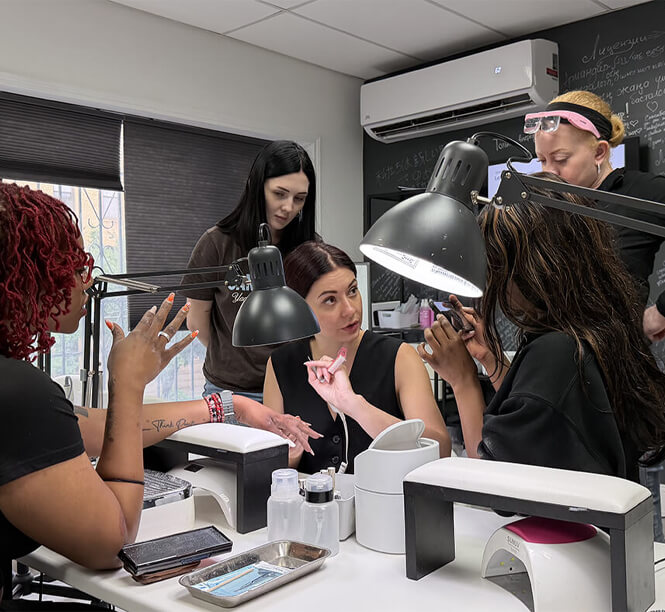
Plastic hands don’t have real cuticles, real nail plates, or real reactions. Our students train on real models under guidance, because that’s the only version of practice that transfers to a salon chair. And because the academy runs inside a working salon, that chair — with real clients, real pace, and real services happening around you — is never more than a few feet away.

Working instructors

Everyone who teaches here also works with clients — in the same salon where you train. Our courses are built on current salon reality — the techniques, products, and standards clients are paying for this year, not the ones from a decade-old curriculum.

Flexible workshops

Not ready to commit to a full program? Our one-day workshops let you try a technique — like Russian manicure — hands-on before investing in complete training. It’s the lowest-risk way to find out if this craft is for you.

Advanced techniques

Our focus is the skill layer above licensing: e-file precision, Russian manicure, structured gel and extensions, nail architecture, smart pedicure — or all of it in one full nail technician program. The techniques that separate techs who compete on price from techs who compete on skill.

Multilingual education

We teach in English, Spanish, and Russian — three languages, one academy — because we believe technique should never be limited by translation.

Reality check: No school makes you a great tech — including ours. A school controls the quality of your instruction, your correction, and your environment. The repetition is yours. We say this to every student on day one, because the ones who understand it are the ones we’re proudest of by graduation.

Not sure which course fits you? Book a free consultation. That’s exactly what the consultation is for: understanding your goals and helping you choose the right path.

That’s us. Now, the quick answers to the questions we hear most.

Frequently Asked Questions

Frequently Asked Questions

How do I become a nail technician in New York? Complete 250 hours of state-approved education, apply to the NYS Department of State, and pass the written and practical exams. There’s also a trainee pathway: a year of supervised salon work plus a short course, then the same exams.

How many hours are required? 250 hours of approved nail specialty education — one of the shortest licensing requirements in the country.

Can I become licensed without experience? Yes. The 250-hour program assumes zero prior experience. Most students start as complete beginners.

How long does licensing take? Most full-time students finish education in 2–3 months; part-time takes 4–6. Add time for application processing and exams. A temporary license can let you work in the meantime.

Can I work while studying? Yes — many programs offer evening and weekend schedules specifically for working students. Separately, New York’s trainee registration lets you work in a salon under supervision while preparing for exams.

Do I need perfect English? No. New York offers the licensing exams in multiple languages, including Spanish and Russian, and training is available in those languages too.

How much can beginners earn? Modestly at first — the first year is about building speed and a client base, with tips supplementing income. Earnings rise sharply with retention and specialization.

What’s the difference between a Nail Specialty license and professional training? The license makes you legal — it’s the state’s safety minimum. Professional training makes you skilled — it’s where modern technique lives. Most serious techs do both.

Can I open my own salon? Yes, and many techs do within a few years. The salon itself needs a separate business license from the state, in addition to your individual license.

Is Russian Manicure included in licensing school? Almost never in real depth. It’s an advanced technique taught in dedicated professional courses — and one of the highest-earning specializations in the NYC market.

What tools do beginners need? Less than you think. A reliable core kit recommended by your school. Skip the expensive shopping spree until your training tells you what you actually need.

Which course should I start with? If you’re unsure about the career: a one-day course. If you’re committed: a foundational manicure course or a full nail technician program, then licensing hours. If you’re already licensed: advanced technique courses like Russian manicure or gel extensions.

Instructor insight: The question nobody asks — and should — is “what will I do in my first week after getting licensed?” Have an answer before training starts: a salon you’ll apply to, models you’ll book, a service you’ll specialize in. Students who begin with a first-week plan almost never join the quiet statistic of licensed techs who never work a single day in the industry.

Didn’t find your question? Book a free consultation. A real instructor will answer your questions and help you understand your next step.

One last thing before you go.

One Last Thought

Every experienced nail technician once started exactly where you are now — reading, wondering, and slightly doubting her own hands.

The path itself is clear: decide if the craft fits you, complete New York’s 250 hours, pass two exams, and then do the real work of building technique, clients, and a career. None of it requires talent you weren’t born with. All of it requires patience you can choose.

The license opens the door. Technique decides what’s behind it.

If you’re ready to start building yours — explore our courses.

And if you’re not sure which one — book a free consultation and we’ll figure it out together.

We’re in touch

1637 E 17th St 3rd floor, Brooklyn, NY 11229


Mon-Fri:

Sat-Sun: