View in
How to Choose the Right Nail Course as a Beginner
Choosing your first nail course can feel weirdly confusing.
There are manicure classes, pedicure classes, full nail technician programs, online lessons, certification courses, “masterclasses,” short workshops, and a hundred people online promising that you can learn everything fast.
So where do you start?
The right answer depends on your goal. Do you want to test the industry first? Learn basic manicure skills? Build a full career as a nail technician? A good course helps you move faster because it gives you structure from the beginning. A weak one leaves you guessing, copying random videos, and fixing bad habits later. Whynot Nails offers structured beginner nail training, but the bigger point is this: choose your first course carefully. It shapes everything that comes after.
Your first nail course teaches more than technique.
It teaches how you hold tools. How you prep the nail. How you understand hygiene. How you think about client safety. How carefully you work around the cuticle area. Those habits stay with you.
Good training gives you a clean foundation.
Bad training does the opposite.
A lot of beginners make the same mistake. They choose the cheapest option because they are “just starting.” That sounds logical, but it can backfire. Cheap training often means rushed lessons, little practice, no real correction, and vague explanations.
Then what happens?
You finish the course but still feel unsure. You watch videos to fill the gaps. You practice without knowing if your technique is safe. You may even need to pay for another course later to relearn the basics properly.
That slows everything down.
If you are serious about how to become a nail tech, your first course should give you skill, safety, and confidence. Not just a certificate you barely understand.
There is no single “best” course for every beginner. The right choice depends on what you want to learn first.
A manicure-focused course is usually the cleanest starting point. You learn nail prep, shaping, cuticle work, polish or gel application, hygiene, and client basics. If you want a practical first step, a manicure course for beginners makes sense.
Pedicure training is different. It focuses on foot care, toenail preparation, hygiene, skin concerns, and safe service steps. A pedicure training course is useful if you want to offer complete hand and foot services, especially in a salon setting.
A full program goes wider. It may include manicure, pedicure, gel techniques, extensions, nail structure, sanitation, client work, and career preparation. If you already know you want professional training from the start, a nail technician program may be the better option.
Then there is the online vs in-person nail course question.
Online courses offer flexibility. You can watch lessons at home and move at your own pace. Good for theory, review, and students with difficult schedules.
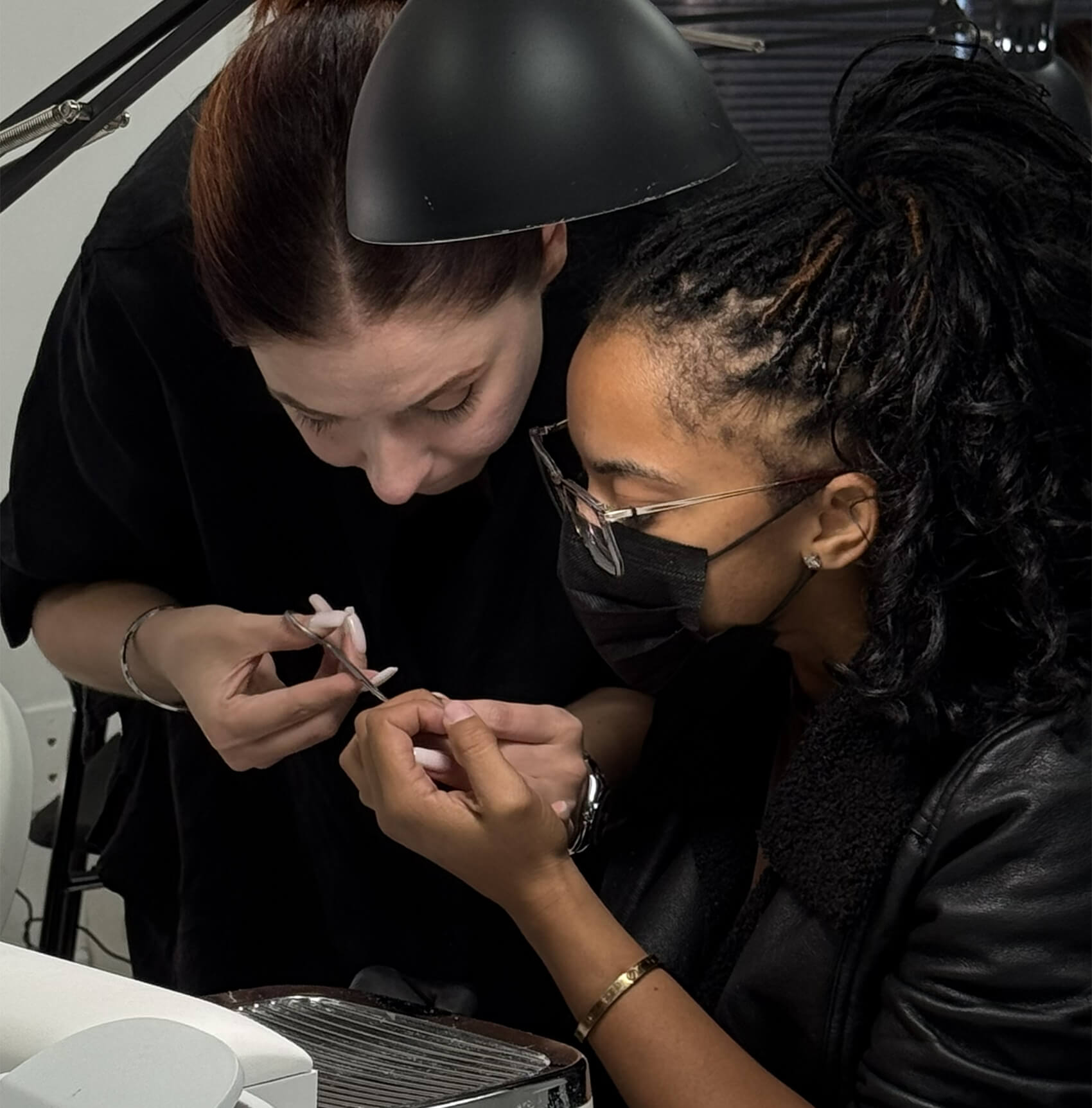
In-person training gives you live correction. That matters a lot for beginners. Nails are physical work. Your hand angle, pressure, speed, and tool control need feedback.
Certification-based courses can also help, especially when they include real instruction and proof of completion. Just remember, a certificate only means something if the training behind it is solid.
A good nail technician course for beginners should not throw you straight into pretty designs.
First, it should teach nail anatomy. You need to understand the nail plate, cuticle area, surrounding skin, and natural nail growth. Without that, technique becomes guesswork.
It should also cover hygiene and safety standards. Tool disinfection, workstation cleanliness, client protection, and product safety are basic. Not optional. Not “advanced.”
Hands-on practice matters too. Watching someone work is useful, but your hands need to learn the movement. You need to practice shaping, filing, applying product, and correcting small mistakes.
The course should include:
Feedback is the big one.
A beginner cannot always see what went wrong. Maybe the pressure is too strong. Maybe the product is too thick near the cuticle. Maybe the shape looks uneven from one angle only.
A good instructor catches those details before they become habits.
Use this checklist before choosing your first nail course.
Do not choose based only on price.
Also, do not choose based only on Instagram photos. A beautiful result does not always mean good teaching. Some excellent nail artists are not strong instructors. Teaching beginners takes patience, structure, and the ability to explain small technical details clearly.
That is what you are paying for.
Not just information.
Correction.
A manicure course is usually the best starting point if you are completely new. It teaches hand care, nail prep, shaping, cuticle work, and basic product application. These are the skills you will use constantly.
If you want a focused beginning, start with a manicure course.
Pedicure training makes sense when you want to offer fuller salon services. Pedicure work has its own safety concerns because you are working with feet, skin, pressure points, and hygiene risks. A proper pedicure course helps you learn the service correctly instead of treating it like “manicure, but on toes.”
A full nail technician program is better if you already know you want a complete career path. It gives you more structure, more practice, and a broader skill set. For students who want deeper preparation, a nail technician program can save time because everything is organized in one path.
A common progression looks like this:
Start with manicure.
Add pedicure.
Move into full nail technician training or advanced services.
Simple. Not rushed.
Online learning can be helpful.
You can pause videos, rewatch lessons, take notes, and study around your schedule. If you already have some experience, online training may help you review techniques or learn theory.
But for beginners, in-person training usually works better.
Why?
Because beginners need correction.
You may think your file angle is fine. It may not be. You may think your cuticle work is clean. It may be too aggressive. You may think your product application is even. The instructor may see a problem right away.
That kind of correction is hard to replace.
The best beginner nail training is structured and guided. It gives you a clear lesson plan, live demonstrations, hands-on practice, and someone who can stop you before a small mistake turns into a habit.
Online can support your learning.
In-person builds your hands.
The first mistake is choosing the cheapest course only because it is cheap.
Budget matters, of course. But training that leaves you confused is not really saving money.
Another mistake is skipping basics. Some beginners want nail art, extensions, or advanced techniques immediately. Understandable. The exciting stuff looks more fun. But anatomy, hygiene, shaping, prep, and product control come first.
A third mistake is taking advanced courses too early. If you cannot complete a clean basic manicure yet, advanced training may overwhelm you. You will spend the whole class trying to catch up.
And the big one: no practice on real models.
You do not need to feel perfect before taking clients.
Nobody starts perfect.
But you do need basic control.
You are getting close when you can complete a full manicure independently without forgetting the order of steps. You understand hygiene and can explain what you are doing. You can prep nails safely. Your results are fairly consistent from one hand to the other.
You should also be able to handle normal client expectations. A client may ask questions. They may move their hand. They may want a shape that does not suit their natural nail. You need enough confidence to respond calmly.
That comes with practice.
Not panic-practice the night before your first client.
Real, steady practice.
If you are trying to figure out how to choose nail course options, start with your current goal.
If you want a clear first step, choose manicure training. If you want to add foot care, take pedicure training. If you want a full career path, choose a complete nail technician program.
Whynot Nails offers structured training for students at different stages, from beginner classes to fuller professional programs. You can review the available nail courses and choose the path that matches where you are now.
The usual progression is simple: manicure, then pedicure, then full technician training if you want the broader career route.
No need to rush.
But do start with the right foundation.
A structured manicure course is usually the best starting point. It teaches nail prep, shaping, hygiene, basic technique, and client service skills without overwhelming beginners with advanced work too early.
No. A nail technician course for beginners is designed for students with no previous experience. The course should start with fundamentals, then move into guided practice and technique correction.
Start with manicure if you want a focused first step. Choose a full nail technician program if you already know you want complete career training and a wider professional skill set.
It depends on the training format, course intensity, and how consistently you practice. Some students learn the basics quickly, but professional confidence takes repeated practice, feedback, and real model experience.