View in
Can You Become a Nail Tech in New York With No Experience
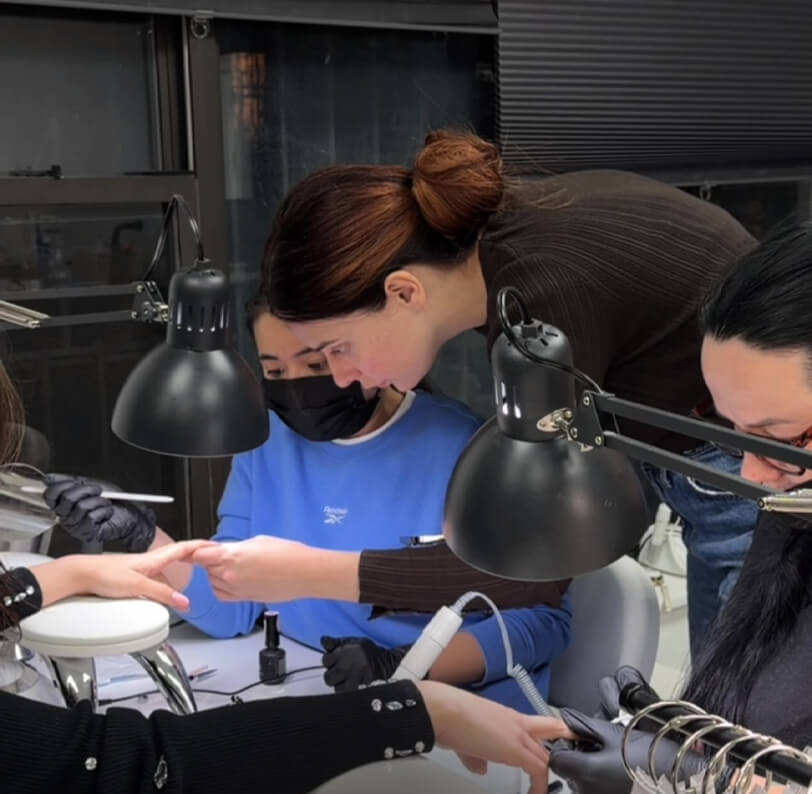
Yes, you can become a nail tech in New York with no experience. You do not need a beauty background, salon connections, or perfect English to start. What matters more is choosing the right training and taking the craft seriously from the first lesson.
Yes, you can become a nail tech in New York with no experience. You do not need a beauty background, salon connections, or perfect English to start. What matters more is choosing the right training and taking the craft seriously from the first lesson.
The biggest challenge isn’t getting started — it’s knowing what to learn first. Let’s look at what beginners actually need to succeed.
Nail work is a craft. That means you can learn it step by step, even if you are starting with zero experience.
You do not need to arrive already knowing how to hold every tool, prep every nail, or understand every product. Good training gives you structure. Practice gives your hands confidence.
Nobody is born knowing how to do clean cuticle work or apply gel smoothly.
Every strong nail tech started with awkward first attempts. The difference is training, repetition, and correction.
As a beginner, you learn how to:
The first goal is not speed. The first goal is control.
Beginner training works best when each skill connects to the next.
You start with basic hand positioning and nail prep. Then you move into product control, service sequence, finishing, and client work. If the order is wrong, everything feels harder than it needs to be.
A good beginner course does not throw you into advanced work without building the base first. It shows you what to do, why it matters, and how to fix mistakes when they happen.
That is where confidence starts.
Brooklyn has steady demand for nail technicians at different levels.
Some clients want classic clean manicures. Others look for detailed Russian manicure work, structured gel, pedicures, or more polished natural nail care. There is room for beginners, but the beginners who grow fastest are the ones who build real technique early.
You do not need to know everything on day one.
You do need to start learning the right way.
Why Not Nails teaches beginners how to build real, usable nail skills.
This is not training where you watch someone work and then leave confused. You learn by seeing, practicing, correcting, and repeating. The goal is to help you develop hands that know what to do in front of a real client.
Manicure work looks simple until you try to do it well.
At WNN, you learn the details that change the final result:
These details matter because clients notice them. They may not know the technical words, but they know when a manicure looks thick, uneven, or rushed.
If you want to see how this training is structured step by step, take a look at our Manicure Course — it was built specifically for students starting from zero.
Pedicure training teaches you more than polish on toes.
You need to understand comfort, safety, hygiene, and service flow. A pedicure client should feel cared for, not processed quickly through a chair.
As a beginner, you learn how to:
Pedicure skills can become a strong part of your future work because many clients book them regularly.
Russian manicure is one of the most requested nail techniques in New York.
It requires precision, patience, and proper instruction. You cannot learn it well by copying short videos online. The technique depends on tool control, safe movement, and understanding the nail area closely.
At WNN, beginners can learn how detailed cuticle work fits into a professional service through the Russian Manicure Course. You build the skill carefully, with correction, so you are not practicing unsafe habits on your own. And if you want to feel the technique in your hands before committing to full training, the one-day Russian Manicure Workshop exists for exactly that.
Hands-on practice changes everything.
You can understand the theory and still freeze when a real person sits across from you. That is normal. Working with real clients helps you connect training to actual service situations.
You learn how to:
This is how you move from “I watched it” to “I can do it.”
You should not have to struggle through training in a language that blocks your learning.
Nail technique is detailed. You need to understand pressure, angles, product amount, tool movement, safety rules, and corrections. If you miss half the explanation, your hands pay for it later.
Learn in Russian, Spanish, or English
WNN offers courses in Russian, Spanish, and English.
That gives you the chance to learn in the language that feels most comfortable. You can ask questions, understand corrections, and follow technical details without pretending you understood something you did not.
That matters.
A beginner needs clear instruction, especially in hands-on work. The more clearly you understand the technique, the faster your confidence grows.
Many students start with no experience.
Some also start with limited English. That does not mean they cannot become professionals. It means the training environment has to support them properly.
You can still learn:
Language should not be the wall that stops your career before it starts.
Good training does not make you feel stupid for being new.
It gives you a path. First you learn the basics. Then you practice. Then you correct. Then your hands start to remember.
That is the real process.
You do not need to look like a professional on the first day. You need to show up, listen carefully, practice seriously, and keep improving.
After a beginner nail course, you should not leave with only theory in your head.
You should leave with real skills you can keep practicing, improving, and eventually using with clients. The goal is to help you move toward a career, not just finish a class.
A strong course gives you skills people can actually pay for.
That includes clean manicures, safer prep, better product control, pedicure basics, and more precise finishing. You may still be a beginner, but you are no longer guessing from scratch.
You begin to understand what professional work should look like.
Client work takes practice.
After training, you can continue building your portfolio, practicing on models, improving timing, and learning how to manage appointments. You also start to see which services you enjoy most.
Some students love detailed manicure work. Some prefer pedicure services. Some want to focus on Russian nail techniques because they enjoy precision.
Training helps you find your direction.
If you want to work legally as a nail technician in New York, licensing is the official next step.
WNN is not a licensing school, and its courses do not replace New York State licensing requirements. What WNN gives you is the skill-building layer that makes the licensing path feel less intimidating. The full path — requirements, exams, costs, timelines, and career options — is covered in our complete career guide for nail technicians in New York.
You can train your hands first, then move through the official state process with more confidence.
That is a smart way to start.
So, can you become a nail tech in New York with no experience?
Yes. Every professional you follow online once picked up an e-file for the first time and had no idea what to do with it.
What separates the people who make it from the people who quit is not talent, background, or language. It is starting with the right fundamentals, practicing with correction instead of guessing alone, and treating the first awkward weeks as part of the process — not proof that it isn’t for you.
No experience is a starting point.
It is not a verdict.
Yes, you can become a nail tech with zero experience. You need proper beginner training, steady practice, and the willingness to learn the craft carefully.
The timeline depends on the course, your practice schedule, and the techniques you want to learn. Basic confidence can start building quickly, but strong professional skill takes repetition and correction.
No, you do not need perfect English to train at WNN. Courses are available in Russian, Spanish, and English, so you can learn in the language that works best for you.
As a beginner, you can learn professional manicure technique, pedicure fundamentals, product control, safe prep, and Russian manicure skills. The training focuses on hands-on work, not theory alone.
After completing a beginner course, you can continue practicing, build a portfolio, work with models, and prepare for the official licensing path in New York. You will have a stronger technical base for future client work.