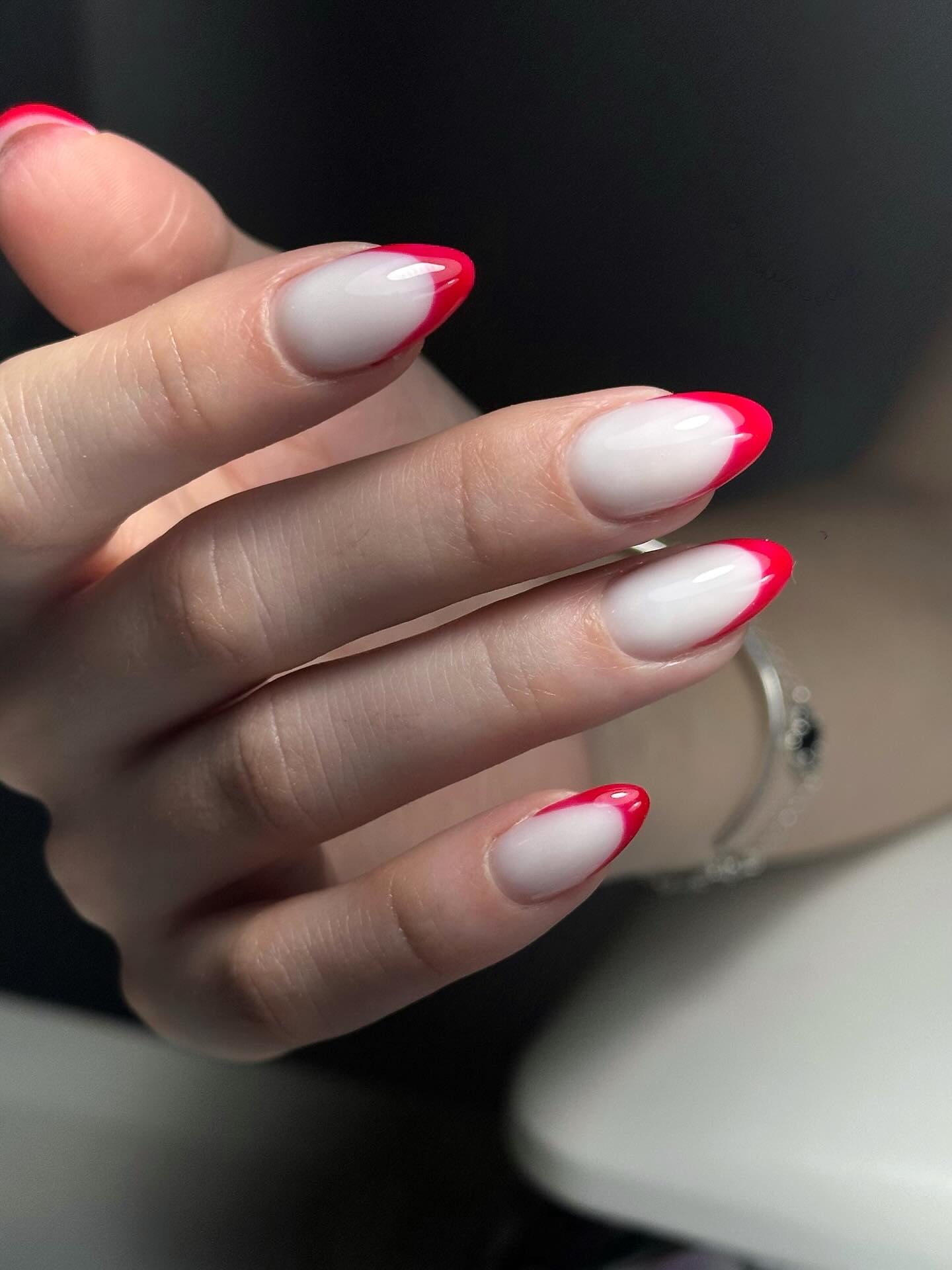
The color still looks good. No chips on the thumb, none on the index finger either. Then you look closer and there’s quite a lot of bare nail near the cuticle. When did that happen? And the middle finger keeps catching on your hair.
So, how long do dip powder nails last? At Why Not Nails, most dip powder nails hold up for about two to three weeks without chipping. Some clients notice grow-out first. Others need attention earlier because an edge has started to lift. We don’t treat those as the same problem.
How Long Should You Expect Dip Powder Nails to Last?
Two to three weeks is a useful number if you are booking around a trip or a busy month. Still, before we recommend the next appointment, we look at the nails.
Even when the coating is still attached, the manicure often looks grown out. Nails keep growing under dip. After a couple of weeks, that bare area near the cuticle may be what bothers you most, despite every tip still looking fine.
The shape may start to feel different too, particularly on longer nails. A fresh set and a set with several weeks of growth don’t sit in quite the same position. We also check for any cracks or separation, even on nails that look good in a quick photo.
5 Factors That Affect How Long Dip Powder Lasts
A manicure doesn’t experience the week in the same way on all ten fingers. We can prepare and apply the coating carefully; the nail underneath will still grow and flex. Five details affect how long a set lasts.
- Your nail growth. The gap at the cuticle gets bigger over time. Faster growth makes the manicure look older sooner, even if the color hasn’t budged. That’s normal growth, not a sign the product has failed.
- Length and shape. A long square tip can catch on pockets and drawer handles. Short rounded nails may be easier for some clients to live with. Even one extra millimeter at the free edge changes how a nail meets a hard surface.
- What your hands do. Dishwashing, frequent sanitizing, unpacking boxes, gardening. Nails get wet, dry out, and knock against things. We often ask which finger chipped first, because the same one may do most of the work.
- Preparation and application. Product placement near the nail folds, suitable layer thickness, surface preparation, and a properly finished free edge can affect wear. More powder isn’t automatically the answer.
- The nail itself. A flexible, peeling, or previously over-filed nail may need a different approach. Product compatibility also counts. We assess the condition before deciding how to proceed.
That ring finger that never chips? It probably spends less time opening things than the thumb. Ask us about a repeated wear pattern. We want to know.
How to Tell When It’s Time for a New Manicure
Some signs are mostly about appearance. Others need a closer look. We ask clients to notice both, especially if the next appointment is still a while away. A tiny crack can be easy to miss.
The Visible Changes
The bare crescent near the cuticle has become noticeable. Perhaps the shape feels too long now, or the tips keep catching on your keyboard. Those are reasonable reasons to refresh a set. You don’t need to wait for a chip.
A crack across the coating is different. So is a sharp edge that snags your sleeve. Even a small break deserves a message to the salon before it gets worse.
And sometimes it’s the finish itself that’s bothering you. The nails have grown out, but you also realize you’d prefer a thinner coating next time, or perhaps something with more structure. Say so at your appointment, and we can talk through which system fits.
The Changes You Can Feel
Pay attention if a nail moves strangely under the coating, feels sore after a knock, or no longer seems secure. A lifted section can trap moisture and debris underneath. Covering it with another coat of product doesn’t deal with what’s already separated.
If discomfort persists, or you notice swelling, unusual discoloration, or separation of the natural nail, seek assessment by a qualified healthcare professional.
What Does Lifting Near the Cuticle Mean?
A small gap where your natural nail has grown is expected. Actual lifting looks different: the product has separated from the nail plate, often leaving a pocket or an edge you can feel with a fingertip. Hair gets stuck there. Sometimes water does too.
There may be product against the skin after application. Or a flexible nail under a relatively firm coating; an old damaged area near the edge. Repeated knocks, too. A photo can help us see the location, though it won’t tell us the cause all by itself.
Don’t peel that corner. And don’t try to stick it down with household glue. We need to see the separation before deciding what can safely be repaired or removed. If it keeps happening on the same finger, tell us. That pattern helps us examine the service and your nail condition more closely.
For a closer look at what lifting, improper removal, and aggressive preparation can do to the nail underneath, read Are Dip Powder Nails Damaging Your Natural Nails?
Can You Make Dip Powder Nails Last Longer?
There are habits worth keeping, ordinary ones. Cream won’t stop the cuticle gap from appearing. Neither will gloves. But both have their place in home care, and a damaged edge deserves attention before it gets worse.
A few practical things:
- Use gloves for long stretches of wet work. Especially dishes and cleaning products. Keep a pair near the sink where you’ll actually reach for them.
- Open a package with scissors instead of your thumbnail. The same goes for can tabs and stubborn stickers.
- Leave chips and loose corners alone. Picking can take thin surface layers of natural nail with the coating.
- Use hand cream and cuticle oil if the skin around your nails gets dry. They help the skin feel comfortable; they aren’t adhesive for a lifted edge.
- Contact us if something cracks or starts catching. Send a clear photo, ideally before you touch the area again.
These habits help, though they won’t give every client an extra week. We prefer to address a problem while it’s small.
Should You Refresh, Remove, or Choose Another Nail System?
Clients ask how often to get dip powder nails redone, usually with their calendars open. Two to three weeks is the usual range, but we’d still ask to see the coating before recommending exactly what happens at the next visit.
Maybe the only problem is that bare strip near the cuticle. The coating looks fine otherwise, so you can book a refresh.
Cracks, lifting, a nail that suddenly feels sore when you touch it. Those need a closer look. We’d want to see what’s happened before applying anything new.
And sometimes the dip comes off and the natural nail underneath looks surprisingly thin. Or feels tender. Don’t rush into another set just yet. Let us assess the condition first.
Not sure when to remove dip powder nails? Don’t peel or pull the coating off: that can take layers of the natural nail with it. Bring the set in, and we will assess it first.
Tell us how the last set wore when you book. A thumb that lifts after a week is useful information, even if the other nine still look beautiful. See our Dip Powder Nails service and prices.