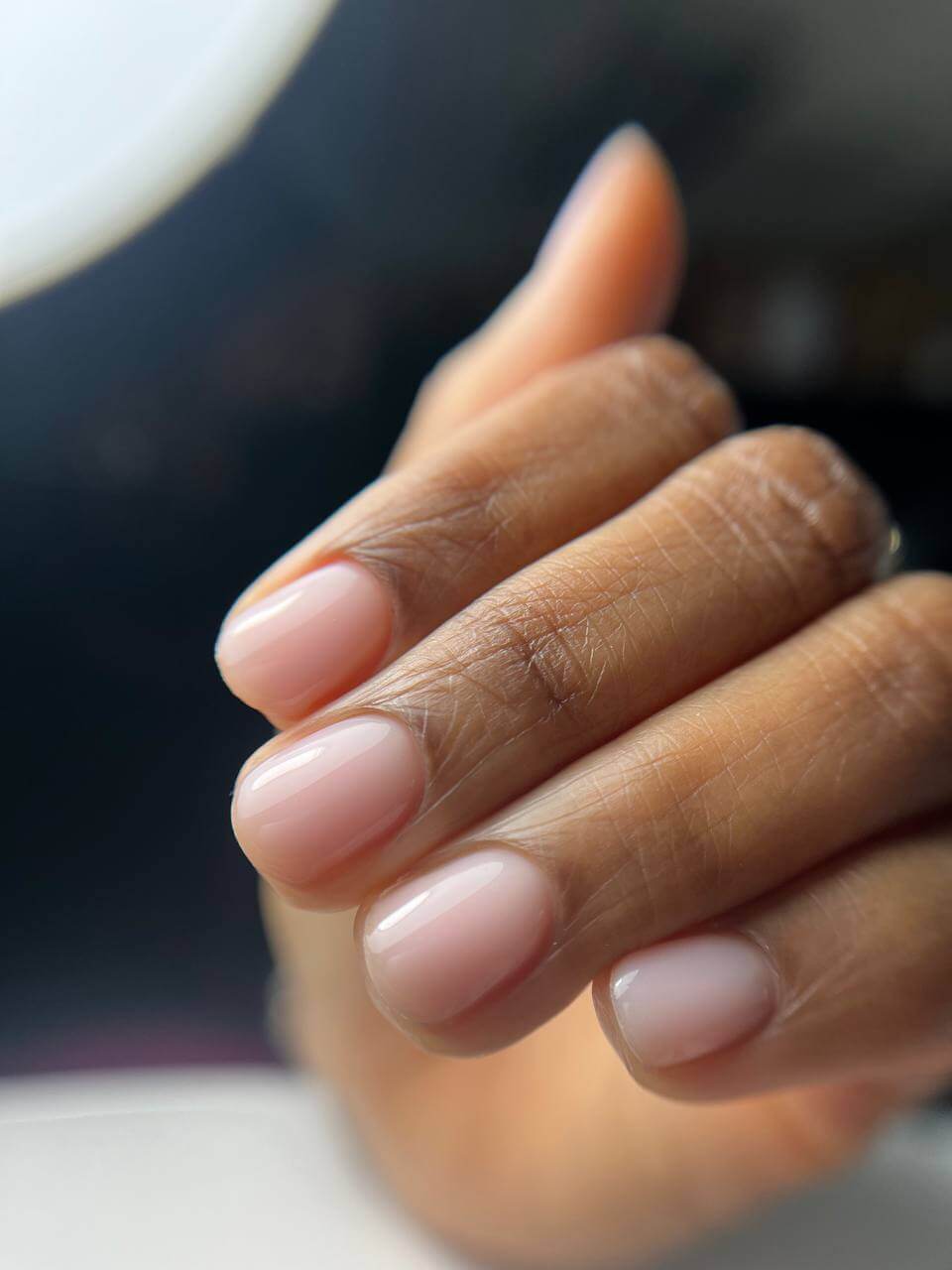
Yes — when it’s performed properly, a Russian manicure is considered safe. The risks people hear about are real, but they come from poor technique, damaged living tissue, and inadequate sterilization, not from the method itself. Done by a trained technician on clean, sterilized tools, it’s a precise, long-lasting service. Done carelessly, like any manicure, it carries real risk.
That’s the short answer. Here’s why it keeps getting misunderstood.
The Russian manicure has been one of the most talked-about nail trends for a few years now, and the debate hasn’t cooled — dermatologists still post warnings about it, and the comments fill with people swearing they’ll never get one. That it wrecks your nails. That it’s an infection waiting to happen. That it’s basically something you should avoid.
So let’s answer the real questions people are typing into Google. Is a Russian manicure safe? Are Russian manicures dangerous? What are the actual risks? The honest answer is more interesting than either the panic or the hype.
The fear isn’t built on nothing. But it’s also not built on what most people think it is. Most of it comes from a mix of viral videos of bad technique, a genuine anatomy mix-up, and a game of telephone between TikTok and news outlets. Once you separate those, the whole thing gets a lot clearer.
And a note on the word “myth.” A bad Russian manicure genuinely can hurt you. So this isn’t really a myth in the “totally false” sense — it’s a misconception. The danger is real; it’s just been attached to the wrong cause.
The whole thing comes down to one confused word: “cuticle”
Here’s where the fear starts. Dermatologists give one piece of advice over and over: don’t remove your cuticle. The American Academy of Dermatology says it plainly — never remove your cuticle, because it can damage the nail. The Mayo Clinic agrees, warning that the cuticle seals the skin to the nail and removing it can lead to infection.
That advice is correct. The problem is that it got stamped onto the entire Russian manicure — including when it’s done right. And the reason is that the word “cuticle” gets used for two completely different things.
One is the cuticle: a thin layer of dead skin stuck to the nail surface. No blood, no nerves — clearing it away is safe, like buffing off a dead flake.
The other is the eponychium: the living fold of skin at the base of your nail. This is the part that actually matters. It seals the gap between skin and nail and keeps out bacteria and moisture. This is what dermatologists are really protecting when they say “don’t remove the cuticle.”
So here’s the key point most headlines miss. A good Russian manicure clears only the dead layer and leaves the living seal alone. The entire skill of the technique is about that boundary: the e-file touches dead tissue, never living skin. Is it possible to nick living skin? Yes — the line sits close, which is exactly why training matters. A skilled tech stays on the safe side of it every time; an untrained one doesn’t. And that’s the real fault line.
The risk is in the technique, not the idea
The sentence to remember: the danger of a Russian manicure comes from how it’s done, not from what it is.
Done badly — living skin over-nipped, the base of the nail traumatized again and again, the nail filed too thin — the risks are real. The main one is chronic paronychia, a painful infection of the skin around the nail that sets in once the protective seal is broken and bacteria get underneath. Repeated rough pushing at the base can also leave ridges across the nail as it grows out. These aren’t rare horror stories; they’re what a heavy-handed version of this manicure actually causes.
But notice the pattern: every one of those problems comes from bad technique, not from the idea itself. The tool isn’t cursed. An e-file in trained hands touches only dead skin; in careless hands it touches whatever it hits. That difference is the whole thing.
Why does a Russian manicure look so much cleaner?
Worth answering directly, because it’s the whole appeal. In a traditional manicure, the cuticle is softened with water, pushed back, and maybe lightly trimmed. A Russian manicure instead uses the e-file to clear all the adhered cuticle clinging to the plate and tucked into the sidewalls, then gently lifts the eponychium to create a tiny “pocket.”
With every trace of dead keratin gone, gel polish can be applied flush to the skin — so it looks like the color is growing straight out of the nail, with no visible gap. Because the surface is prepped so thoroughly (which also removes oils that interfere with adhesion), the gel bonds better and takes longer to show that grown-out edge. That’s the real reason these manicures can last three to four weeks. The clean look and the longevity come from the same thing: meticulous removal of non-living tissue only.
Is bleeding normal? No. Never.
This is the simplest safety rule there is, so it deserves its own line.
A correct Russian manicure works only on non-living keratin — which has no blood supply and no nerves. That means it should not hurt and should not bleed. If it bleeds, living tissue was cut. If it stings or burns, something went wrong. Pain and blood aren’t “part of the process” or a sign it’s “working” — they’re a sign the tech crossed the line into living skin. On a client, that’s your cue to speak up or not rebook.
Why do some dermatologists dislike Russian manicures?
This is worth being honest about, because it explains the tension between “derms hate this” and “millions get it safely.”
Dermatologists overwhelmingly see the failures. Nobody books a dermatology appointment to show off a great manicure. As one Cornell dermatology professor put it, patients often come in after a very aggressive nail technician, usually with an infection from over-vigorous manipulation. So a derm’s mental sample is skewed toward the worst outcomes — which, reasonably, makes them cautious.
On top of that, medical guidance is written for the general public, not for the client of a specific master technician. When the AAD says “never cut your cuticles,” it’s giving one safe, universal rule that works whether you’re at a top salon or doing it yourself with drugstore clippers. It’s designed to minimize risk across millions of people, not to evaluate what a highly trained specialist can do safely. Both things can be true at once: the blanket warning is good public-health advice, and a skilled tech working only on non-living tissue is a different situation than the one the warning is guarding against.
What clients should actually look for
The real takeaway isn’t “avoid the Russian manicure.” It’s “avoid a bad one.” Here’s what genuinely protects you — and most of it lines up with what the AAD and Mayo Clinic recommend for any manicure:
A trained, licensed technician. Both the AAD and Mayo Clinic explicitly say to check that your tech is licensed and experienced. This matters more here than for a basic mani, because the margin for error sits so close to living skin. In some U.S. states, aggressive cuticle removal is legally restricted — a scope-of-practice line, not proof the technique is inherently harmful.
Real sterilization. This is non-negotiable for any service that works close to the skin. Metal tools should be cleaned and either fully immersed in an EPA-registered hospital-grade disinfectant for the labeled contact time or run through an autoclave — the standard written into state cosmetology regulations. Look for sealed sterilization pouches, fresh bits, and dry storage. Porous items (wood, foam, non-metal files) should be single-use and thrown away after you. If you’re ever unsure, bring your own file and clippers.
No pain, no bleeding. Covered above, but it’s the fastest real-time safety check you have.
Aftercare. Keep the skin around your nails moisturized between appointments to support the barrier — dermatologists recommend this specifically because a well-hydrated seal reforms and functions better.
Where Why Not Nails stands on this
We’ll be direct, because this is what our whole approach is built on: the difference between a safe Russian manicure and a damaging one is entirely the person holding the e-file.
That’s why, in our training, students spend real hours on nail anatomy before they ever touch a client with a drill. Understanding exactly where non-living tissue ends and the living eponychium begins isn’t academic trivia — it’s the foundation of the technique. A tech who can’t tell the cuticle from the eponychium is exactly the tech who produces the scary before-and-afters. A tech who can is the reason so many clients switch to Russian manicures and never look back.
If you want to learn the method the safe way, our Russian Manicure Course is built around exactly this — safe e-file technique, cuticle-versus-eponychium anatomy, and sterilization done right. Short on time? The One-Day Russian Manicure Course covers the essentials in a single hands-on session.
We’re not interested in defending bad work. We’re interested in the standard that makes the criticism obsolete.
So, are they safe?
A Russian manicure isn’t dangerous because of what it is. The scare came from viral videos of it done badly, amplified by a real but avoidable confusion between dead cuticle and living skin — and reinforced by dermatologists who mostly see the failures.
Strip that confusion away and you’re left with an unglamorous truth that applies to every service in a nail salon: skill and sterilization are everything. Done by a trained tech on non-living tissue only, with clean tools and no pain, a Russian manicure is a precise, long-lasting service. Done carelessly, it’s a real risk.
The evidence doesn’t support the idea that Russian manicures are inherently unsafe. It supports something much simpler: any manicure becomes risky when anatomy, training, or sterilization are ignored.
Precision isn’t the danger. The lack of it is.