View in
Russian Manicure Certificate vs. New York State License: What Every Beginner Gets Wrong
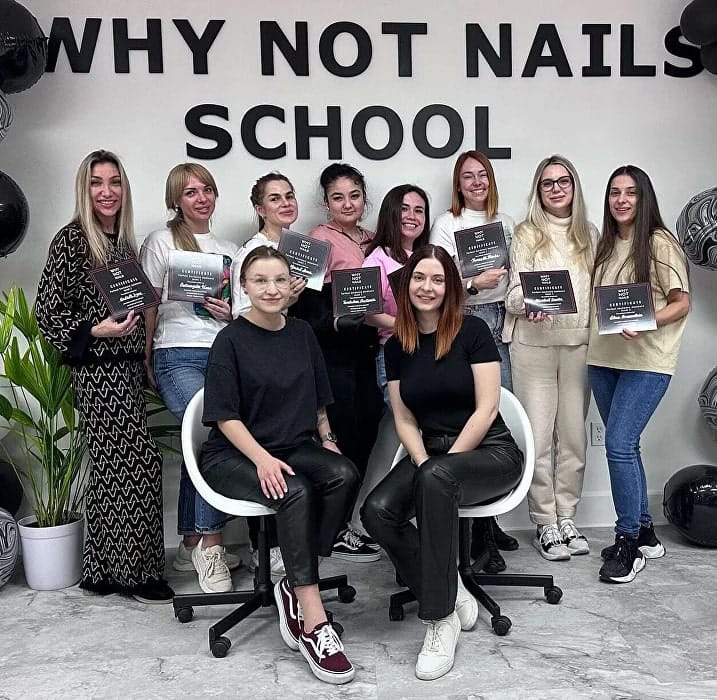
Let’s clear up the single most common source of confusion for anyone starting out in nails — because getting this wrong can cost you money, time, or worse, a run-in with the state.
You’ve probably searched for something like “Russian manicure certification” and seen dozens of schools offering one. Here’s the answer in one line, before anything else: a Russian manicure certificate is a certificate of completion — it is not a professional license. A certificate proves you learned a technique. A New York State license is what legally lets you charge clients for nail services. They’re two different things, and one does not replace the other. Understand both before you spend a dollar on training.
A Russian manicure certificate is a certificate of completion. It means you enrolled in a specific training program and finished it — the hands-on practice, the technique work, the supervised sessions.
Depending on the school, that training might cover e-file control, cuticle prep, nail anatomy, sanitation and sterilization workflow, product placement, and live-model practice. That’s real, valuable education, and a certificate is a legitimate signal that you invested in learning the craft properly rather than from a phone screen.
But be honest with yourself about two things it is not:
It is not proof of mastery. A certificate says you completed a course, not that you’ve perfected a technique that genuinely takes months of repetition and correction to get consistent. Any school implying that one course makes you an expert is overselling.
And — this is the big one — it is not a license.
A New York State Nail Specialty License is a legal credential issued by the New York State Department of State. That’s the key word: the state grants it, not a school — and only after you meet the state’s requirements.
You don’t need the full procedure here, just the shape of it. In New York that means a 250-hour approved course of study and passing both the state’s own written and practical exams — New York runs its own tests, not the national NIC exam most states use. It’s the nail-focused route, separate from the 1,000-hour cosmetology license. There’s also a trainee pathway (a 27-hour course plus a year working under a licensed specialist, then the same exams), and once you’re licensed it’s valid for four years.
The details matter less than the one thing that doesn’t change: none of it is replaced by a school certificate. A certificate can prove you completed schooling that helps qualify you — but you still pass the state’s exams and get licensed by the state to work legally for pay. (Requirements do change, so confirm current specifics at dos.ny.gov before you apply.)
Here’s the part that’s easy to overlook, and it’s where New York gets strict. The Russian manicure works right at the boundary of living skin — and that boundary is exactly what state boards regulate.
No state, New York included, bans the Russian manicure outright. What state regulation targets is narrower and more important: working on living tissue. The consistent principle is that a licensed nail tech may work on dead tissue — the dead cuticle and non-living skin on the nail plate — but not cut or damage living skin, including the living eponychium. (New York regulates nail specialty under its Appearance Enhancement Law; the anatomy behind that line we cover in depth in our piece on whether Russian manicures are safe.) A correctly performed Russian manicure removes only dead tissue — which is exactly why proper technique and licensing both matter so much.
So for this technique, “certificate vs. license” isn’t bureaucratic hair-splitting. Working close to living skin, for pay, without a state license isn’t a paperwork gap — it’s practicing outside the law, in the exact zone the state cares about most. Here’s the cleanest way to hold the difference: the license is your right to be in the room; the certificate — and the real skill behind it — is what makes clients choose you once you’re there. The license shows the state you’re allowed to do the work. The certificate shows you were actually taught to do it well.
Both, in the right order — and it helps to see how they fit together:
The license makes you legal. If your goal is to work on paying clients in New York, the Nail Specialty License is non-negotiable. Start there, or plan for it early: 250 approved hours, the state exams, the application.
The certificate makes you good at the specialty. A general nail license teaches you to work legally and safely across manicure services. It does not teach you the Russian technique to any real depth — that’s a specialist skill you build separately, through focused training and correction. This is where a dedicated Russian manicure course earns its place: it’s the technical depth on top of the legal foundation.
You don’t need a long checklist here. For this specific topic, one question does most of the work:
“Is this certificate a certificate of completion, or a state license — and will you tell me that in writing?”
A school that answers instantly and plainly — “completion certificate; the license comes from the state, here’s how that works” — is a school being straight with you. A school that gets vague, leans on the word “certified,” or lets you walk away believing the paper itself makes you legal to work is telling you something important about how it operates. The wording on your certificate should be unambiguous, and a good program will explain the certificate-versus-license distinction before you enroll, not after you’ve paid.
Everything else follows from that honesty. A school willing to be precise about what its certificate is will usually also be precise about the rest — what you’ll realistically be able to do afterward, where the legal boundaries sit, how much practice mastery actually takes. Vagueness about the certificate tends to travel with vagueness about everything else.
A Russian manicure certificate and a New York State license answer two different questions — and it’s easiest to see side by side:
| New York State License | Russian Manicure Certificate | |
| What it does | Lets you work legally for pay | Teaches you a specialty technique |
| Issued by | New York State (Dept. of State) | A school |
| Status | Required to work | Optional, but valuable |
| Answers | “Can I legally do this work?” | “Was I trained to do it well?” |
You want a yes in both columns — and a school that’s completely straight with you about which one it’s handing you.
At Why Not Nails, we teach the specialty: the e-file control, the anatomy, the safe cuticle work that makes a Russian manicure clean and lasting. We believe students should understand exactly where that training fits alongside their state licensing — not walk away with a piece of paper and assume it’s more than it is. If you’re just starting to map out the path, our guides on becoming a nail tech in New York with no experience and how to choose the right nail course as a beginner are good next reads.
Know what you’re buying. Then buy the training that’s honest about it.
No. The New York State Nail Specialty License comes from completing approved schooling and passing the state exams. A Russian manicure certificate is separate specialty training — valuable for your skill and reputation, but not a licensing requirement.
Not legally paying clients. Charging for nail services in New York requires a state license; a certificate alone doesn’t grant that legal standing, no matter how thorough the training was.
No. The license covers the legal scope and safe fundamentals of nail services generally. The Russian technique — e-file cuticle work, precision placement — is a specialist skill you build through additional dedicated training.
Yes, when performed by a licensed nail tech who works only on dead tissue and doesn’t cut or damage living skin. The technique isn’t banned; what’s regulated is staying on the correct side of that boundary.