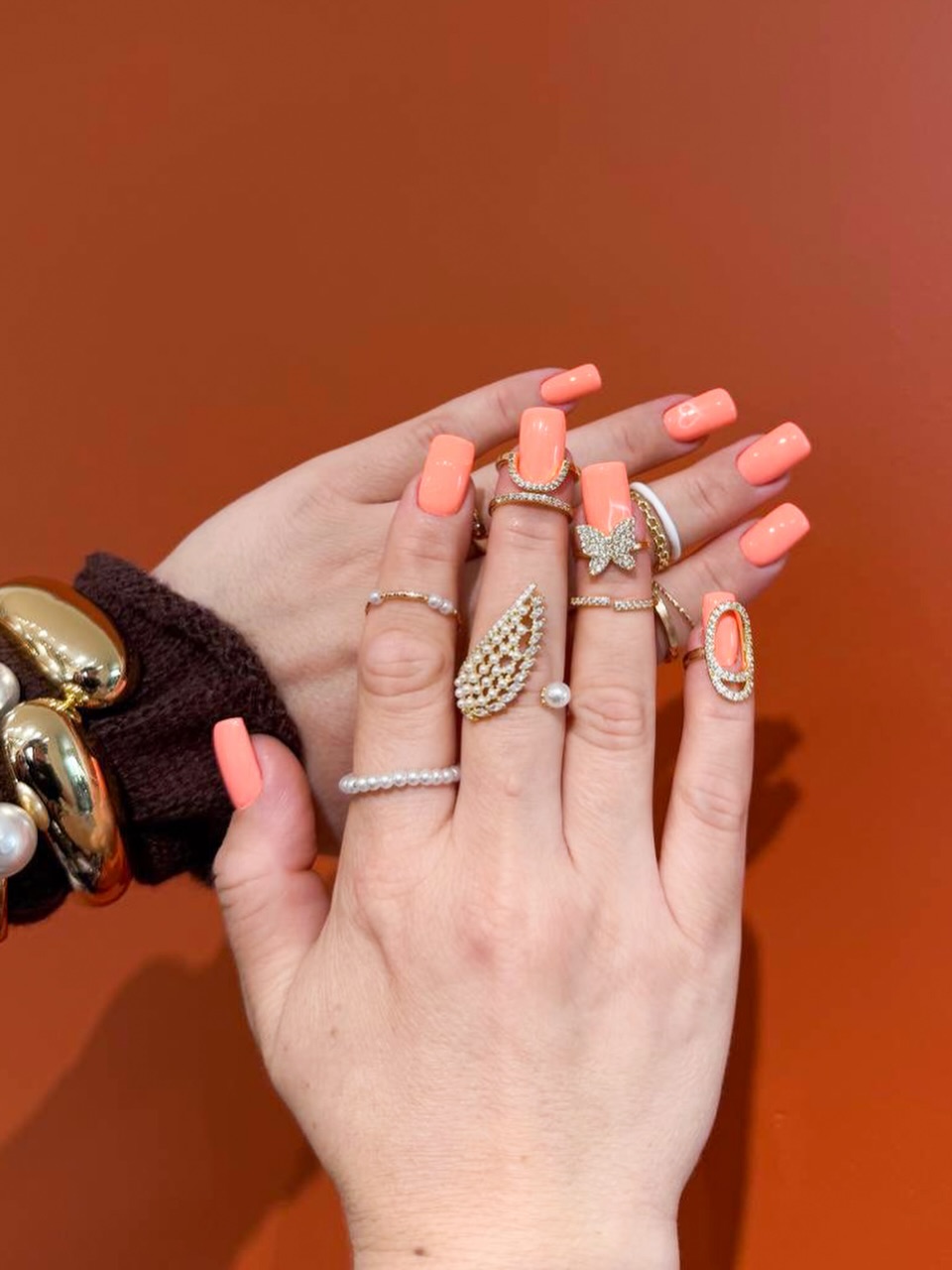
The color still looks good when the dip comes off. Except there’s a rough patch on your index nail now, and the thumb feels bendier. Maybe it was already like that? Hard to tell after weeks under a coating.
So, is dip powder bad for your nails? There’s no blanket answer. Prep matters, and so do application, daily habits, and removal. A manicure can hide a problem for a while, so tell us what happened at the last appointment.
Five things to pay attention to.
1. Nail Preparation and Over-Filing
A technician needs a surface the product can adhere to. Residue and oils have to be dealt with according to product instructions. The natural nail plate is part of that process, and it’s easy to forget that it has a limited thickness. You can’t keep filing forever.
At Why Not Nails, our Dip Powder Nails service starts with a dry e-file technique to clean the cuticle area before any product is applied. The tool itself tells you little about how gentle the work will be (more on e-file safety). Pressure does. How the technician responds when a nail is already thin near the free edge.
A rough white patch after the previous set, for example. It might have been over-filed, or there might be another explanation. We’d want to look before applying anything. Pain or an unusual change needs caution.
And cuticles. People ask for them to look perfectly clean, but healthy skin around the nail serves a purpose. Aggressive cutting and repeated passes with a bit can leave it injured (what actually happens to your cuticle with an e-file). A tidy manicure shouldn’t mean sore fingers the next morning.
2. Product Application and Excessive Thickness
Dip usually involves a bonding base, powder in layers, an activator and the finishing products specified by the manufacturer. Placement matters.
Sometimes a manicure looks slim from above, but turn the hand sideways and you see a thick ledge near one of the edges. You notice when it catches a sweater. Extra layers aren’t an automatic improvement; buildup in the wrong place can make the finish awkward and encourage snagging.
Here’s what we check during application:
- Is the product sitting neatly on the nail, away from the surrounding skin?
- Does the thickness make sense for that nail’s length and shape?
- Any uneven area near the free edge that will catch during normal use?
None of this turns the natural nail into a stronger nail underneath. The coating may feel hard. That’s the coating you’re feeling. A damaged nail still needs assessment. Product won’t reverse it overnight.
3. Wearing the Manicure Too Long
There’s a point where the grow-out bothers you before anything else does. The little bare crescent near the cuticle gets wider. Easy to ignore for a while.
What needs checking is the product itself. A crack near the sidewall. A pocket of lifting you can feel every time you run fingers through your hair. That tiny gap can collect moisture and debris. Don’t press it down with glue and assume it’s fixed.
Watch out for:
- Lifting that keeps spreading. Call the salon. Even if the color still looks fine.
- A cracked coating after a knock. Check the nail underneath, too.
- Repeated catching at the tip. Especially if a corner feels loose or sharp.
- Soreness or pressure that wasn’t there after the appointment. Mention it promptly.
Nails grow at different rates. People handling boxes all day put pressure on their nails differently. There’s no single date when everyone should remove a set. Ask your technician what to expect with the specific system, then contact them earlier if something changes.
4. Improper Removal
A loose edge is hard to leave alone. You notice it during a phone call. Five minutes later, half the product is in your hand and the nail beneath has a strange, papery feel.
That sort of peeling can take superficial layers of the natural nail away. Excessive filing or forceful scraping can do the same, sometimes over several appointments before the damage becomes obvious. So when people ask whether dip powder damages nails, removal belongs in the answer.
Many dip systems use acetone as part of removal, often after the top layer is carefully reduced. The exact method depends on the finishing product, too. Acetone can dry the surrounding skin, as well. People often forget which finish was applied last time. If you know the product name, bring it. It can help the technician plan the removal.
The useful rule is simple: don’t pry it off. Tell the technician what product you wore and if the previous removal left your nails tender.
5. Salon Hygiene and Shared Powder Containers
You’ve probably seen dip powder applied straight out of a jar. One finger goes in, then another. It’s worth asking what happens to that jar afterward, especially if several clients use the same powder supply.
Cross-contamination is the concern. Powder that’s been in contact with one person’s nail or skin should not go back into supplies used on other clients. Salons may portion powder into individual containers or dispense it over the nail with an appropriate tool, according to their product system and hygiene procedure.
The jar is only one part of the setup
Clean work surfaces, appropriately processed reusable tools, fresh single-use items. All of that is part of hygiene. At Why Not Nails, we follow strict hygiene protocols using sterilized tools and professional-grade products.
No procedure removes every possible risk, so it is reasonable to ask how the powder and tools are handled.
Signs Your Natural Nails May Need a Break or Professional Assessment
A patch of discoloration after removal doesn’t automatically mean the dip caused it. The same with ridges, peeling or a nail that seems thinner. Previous injury or nail conditions can produce similar changes. Looking at a photograph online isn’t a diagnosis. People use “dip powder damage” for everything from peeling nails to sore fingers.
What we pay attention to is how the nail feels first, and then how the change develops. Persistent soreness is a red flag, and so is a nail separating from the skin. So are new discoloration, swelling around the nail fold, and itching or a rash after the product is applied.
Persistent or concerning symptoms? See a dermatologist so a professional can assess the condition. Sometimes the right plan is to leave the nail uncoated until it’s properly evaluated.
How to Make a More Informed Decision About Dip Powder
Before booking, ask about preparation. Especially if you’ve had repeated filing or painful removals elsewhere. Tell us if a particular product made your fingers itch, even if the reaction cleared up quickly. If you have a known allergy to acrylates, let us know before your appointment. Those details help the technician plan the appointment.
A few questions worth bringing to the appointment:
- What base, powder and finishing products will be used on my nails?
- How is the powder dispensed, and what happens to the unused portion?
- If the coating lifts, how do I arrange a repair or removal?
- Can we look at the condition of my natural nail before another set?
If you are checking ingredients, see our HEMA-free services. HEMA (hydroxyethyl methacrylate) is a monomer that can cause an allergic reaction in some people. HEMA-free products leave it out, but they can still contain other acrylates, so HEMA-free does not mean allergy-proof.
The technique deserves as much attention as the formula.
How did your nails feel once the coating came off? Tell us. It’s useful information, even if all you’re booking is the same color again. See our Dip Powder Nails service and prices.